HDI PCB Manufacturing Process: Microvia and Buried Via Technology Explained
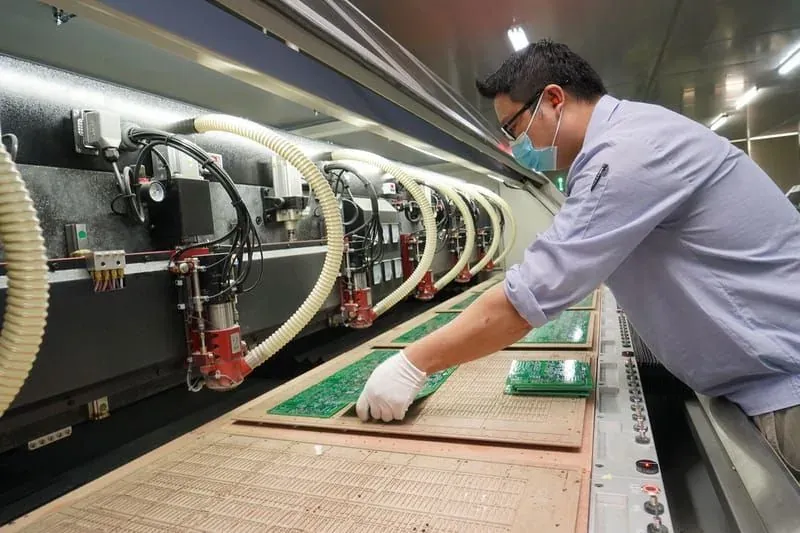
What is HDI PCB?
HDI (High Density Interconnect) PCB is an advanced circuit board that uses microvia, buried via, and fine-line technologies. Compared to traditional PCBs, HDI boards offer higher routing density, smaller form factors, and superior electrical performance.
As electronic products trend toward miniaturization and higher performance, HDI PCBs have become standard in smartphones, tablets, wearables, and other consumer electronics.
Microvia Technology
Microvias are the core technology of HDI PCBs, typically with diameters less than 150μm (6mil).
Laser Drilling Process
- CO2 Laser: Suitable for dielectric window opening, 100-150μm diameter
- UV Laser: For finer holes (50-100μm), can drill directly through copper foil
- Combined Process: CO2 for window opening, UV for refinement
Microvia Types
- Blind Via: Connects outer layer to inner layer without penetrating the entire board
- Buried Via: Exists only between inner layers, invisible from outside
- Through Via: Penetrates all layers of the board
- Stacked Via: Multiple microvias stacked vertically
- Staggered Via: Microvias offset from each other
Build-up Manufacturing Process
HDI PCBs are manufactured using build-up technology. Common structures include:
1+N+1 Structure
The most basic HDI structure with one build-up layer on each side of the core. Suitable for smartphones, GPS, and consumer electronics.
2+N+2 Structure
Two build-up layers on each side, providing higher routing density. Used in high-end smartphones and complex IC packaging.
AMIC (Any Layer Interconnect)
All layers can be directly connected through microvias, offering maximum routing density for the most advanced mobile devices.
Design Rules
| Parameter | Standard HDI | Advanced HDI |
|---|---|---|
| Min trace width/space | 75/75μm | 50/50μm |
| Min microvia diameter | 100μm | 75μm |
| Min pad diameter | 250μm | 200μm |
| Layer-to-layer alignment | ±50μm | ±25μm |
| Dielectric thickness | 60-80μm | 40-60μm |
Applications
- Smartphones: Mainboards, camera modules
- Wearables: Smartwatches, health monitors
- Medical: Implantable devices, diagnostic instruments
- Aerospace: Satellite communications, navigation
- Automotive: ADAS, autonomous driving controllers
Conclusion
HDI PCB manufacturing is a comprehensive technology requiring precision equipment and extensive process experience. Choosing a supplier with mature HDI capabilities is key to ensuring product quality.
Contact our engineering team for professional HDI PCB design and manufacturing consultation.
Need PCBs for Your Project?
Get an instant quote — prototypes from $2, delivered worldwide.
Get Instant Quote