PCB Knowledge Base
Design guides, manufacturing insights, and industry trends from our engineering team.

PCB Assembly Rework, Repair and Modification: Who Authorizes What in the PO
Rework, repair and modification are three different actions on an assembled board. Set the approver, allowed method, limits, records and shipment marking for each in the PO.
Read More →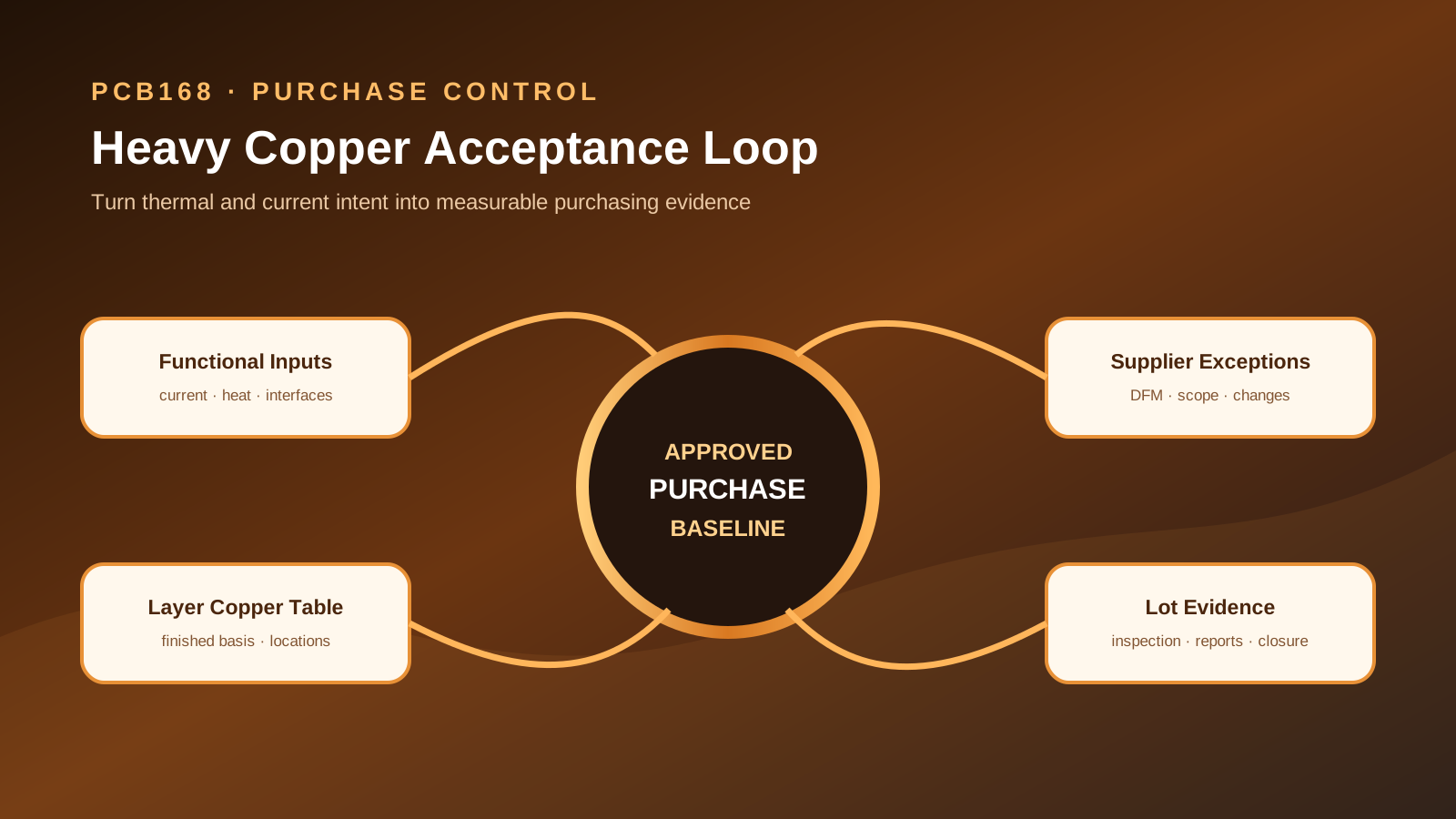
Heavy Copper PCBA Conformal Coating: How to Write Edge Coverage into the PO
Thick copper conductors leave tall edges and sharp corners where coating runs thin. Specify material, masking, coverage, inspection points and rework ownership in the PO.
Read More →
HDI PCB Supplier Data Release: What to Send at RFQ, PO and Production
Sending the full HDI design package to every supplier is the default, not a requirement. Release data in stages, log each release and close it out when the job ends.
Read More →
Heavy Copper PCB Marking: Date Code, Serial and Lot Traceability
Where to put date codes, serials and QR codes on a heavy copper PCB, which marking method survives thick copper, and who defines the format in the PO.
Read More →
PCB Assembly Functional Test: Who Writes the Pass/Fail Criteria
An "FCT PASS" stamp means nothing without a written procedure. What a PCBA functional test procedure must contain, who writes and signs it, and what records to ask for.
Read More →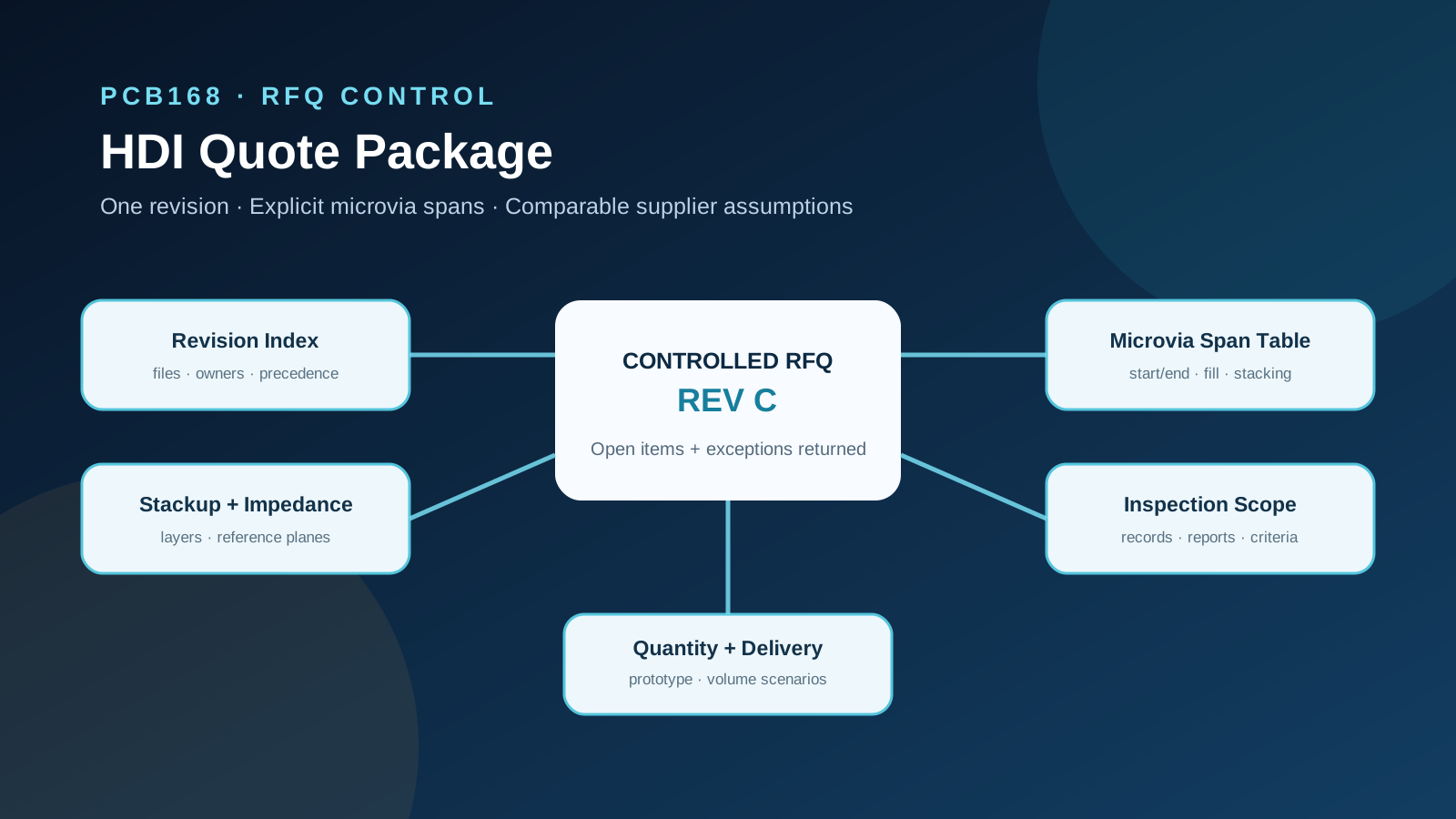
HDI PCB Drill Files: Defining Layer-Pair Spans for Every Via
One merged drill file turns blind and buried vias into guesswork. Split HDI drill data by layer pair, name each file and add a span table that matches the stackup.
Read More →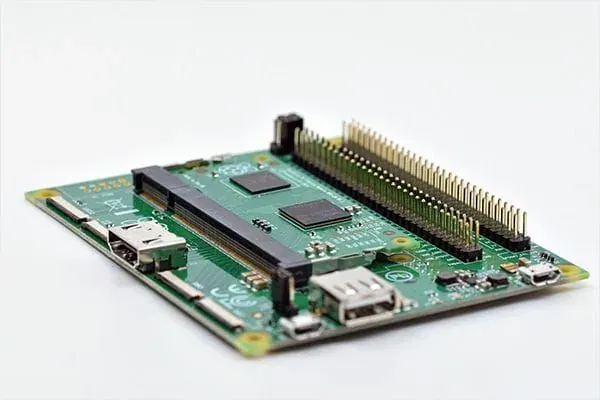
BGA X-Ray Inspection in PCB Assembly: Coverage and Void Criteria
"X-ray inspection required" is not a spec. Define which packages, how many boards, which void and defect criteria, and what images you receive before you place a PCB assembly order.
Read More →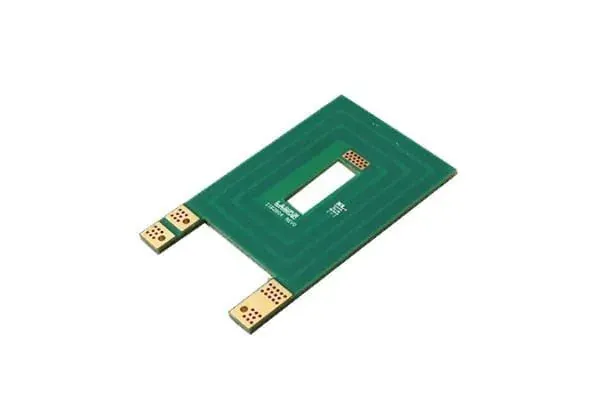
Heavy Copper PCB Temperature Rise Test: Conditions and Pass Criteria
A copper-weight calculation is not a temperature rise result. Define test sample, ambient, current, measurement points and steady-state rule before you approve a high current heavy copper PCB.
Read More →
HDI PCB Microvia Reliability Tests: What to Specify in the PO
A clean microsection does not prove stacked microvias survive reflow and thermal cycling. Specify the stress test, coupon, pass criterion and frequency in your HDI PCB purchase order.
Read More →
HDI PCB Supplier Audit: Define the Scope and Who Pays Before You Book the Trip
An HDI supplier audit is a contract arrangement with a scope boundary, cost owner, validity period and re-audit triggers, not a one-off site visit. Here is what to list, which subcontracted steps to name, and which document makes it enforceable.
Read More →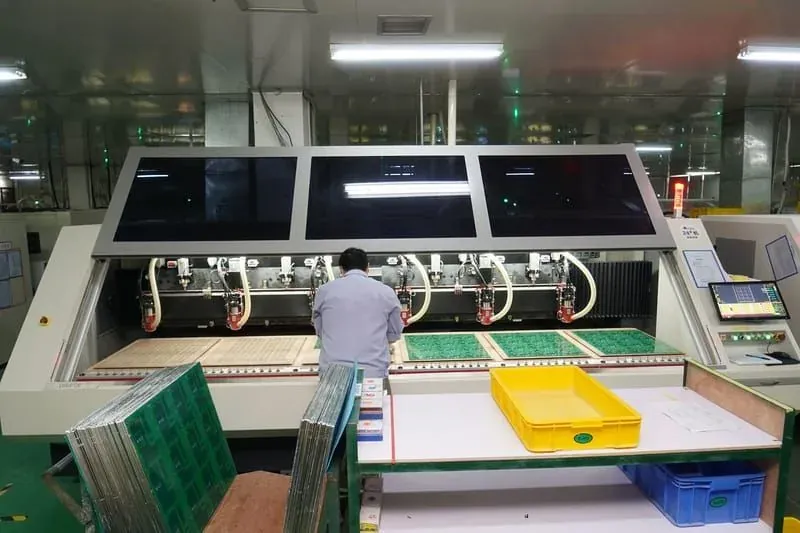
Heavy Copper PCB Flatness: What to Declare in the RFQ Before Warpage Becomes a Dispute
Warpage on heavy copper PCBs is a delivery attribute, not a cosmetic flaw. Learn which RFQ field carries flatness, the four measurement conditions that must be agreed, and who owns the cost when boards arrive out of tolerance.
Read More →PCB Assembly Sourcing Channels: Which BOM Lines Need a Declared Source
Once a part is on the board, its channel is no longer observable. Learn which BOM lines need a declared sourcing channel, what evidence each channel tier can actually produce, which documents to require, and who approves a channel change.
Read More →HDI PCB Supplier Quotes: Which Line Items Actually Move the Price
Three HDI PCB quotes with similar totals can hide completely different cost structures. Learn which line items are real cost drivers, which are just allocation choices, which gaps come from scope rather than price, and what to ask to put every quote on one basis.
Read More →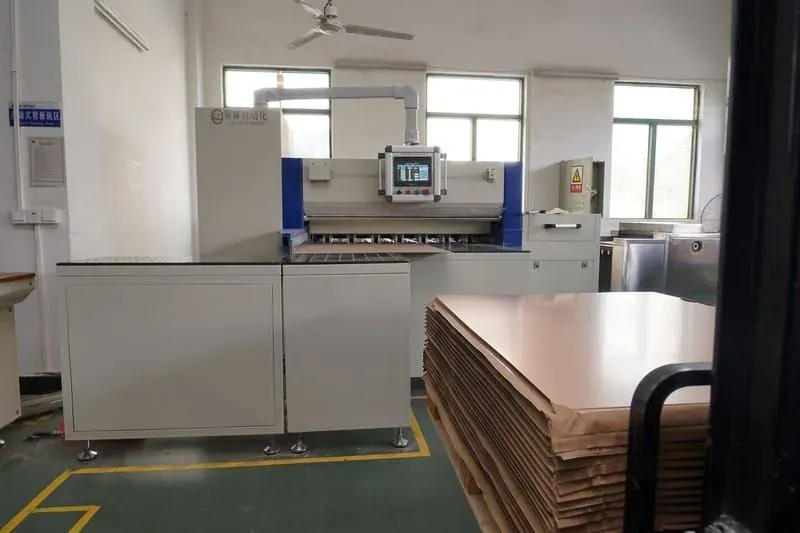
Industrial Heavy Copper PCB Second Source: What Transfers, What Gets Re-decided
Moving an industrial heavy copper PCB to a second supplier re-opens every choice your first fab made silently. Learn what to declare before the transfer, which tooling and records stay behind, and what comparison evidence proves both fabs built the same board.
Read More →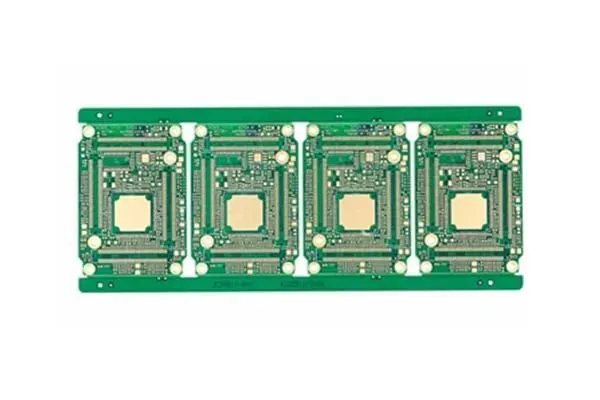
HDI PCB Manufacturing Process: Which Stage Your Change Still Fits Into
An HDI change costs what the process stage lets it cost. Learn which stages lock permanently, which changes mean a full rebuild after lamination, what a change request must carry, and who has to approve it for the file to hold at acceptance.
Read More →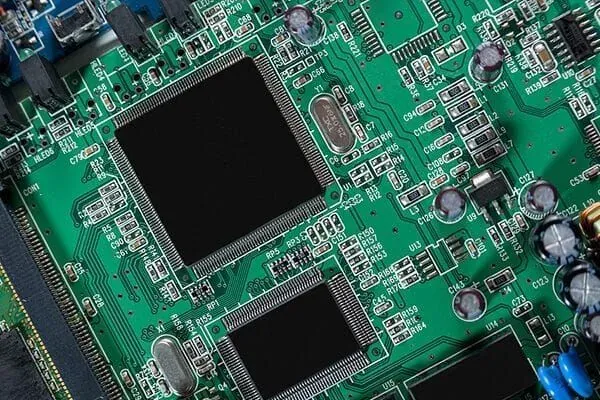
EMC/EMI Components on a PCBA BOM: Declaring What the Assembler May Not Substitute
Your assembler reads three columns to judge equivalence. For common-mode chokes, ferrites, filters, ESD parts and shielding hardware, the properties that decide equivalence are not in those columns. Here is how to declare the restricted-substitution scope, the attributes each line needs, and who holds the veto.
Read More →PCB Fabrication Specifications in Conflict: Which Document Wins
Your RFQ package has a spec sheet, a fab drawing, Gerber data and an email thread all ruling on the same attribute. Set the order of precedence yourself, in writing, before the fab sets it for you.
Read More →
HDI PCB Supplier Shortlist: Rank by Evidence You Can Actually Get
Every HDI supplier says yes. Sort their claims by when each one becomes verifiable — at quote, at first article, at volume, or never — and draw your shortlist line where the evidence still exists.
Read More →PCB Edge and Outer Layer Inspection: What You Can Actually Judge On
Board edge and outer layer complaints are the hardest bare-PCB disputes to settle, because "it looks wrong" is not a criterion. Here is how the common findings in both locations split into functional and cosmetic, which side carries the burden of proof for each, and the four declarations that have to exist before anyone can judge at all.
Read More →How to Screen Aluminum PCB Manufacturers: The Dielectric Evidence to Ask For
Quotes from aluminum PCB manufacturers rarely differ on the aluminum. They differ on the dielectric bond layer between aluminum and copper, which no quote line shows. Here is the verifiable evidence to request during screening, and how to word it so it binds.
Read More →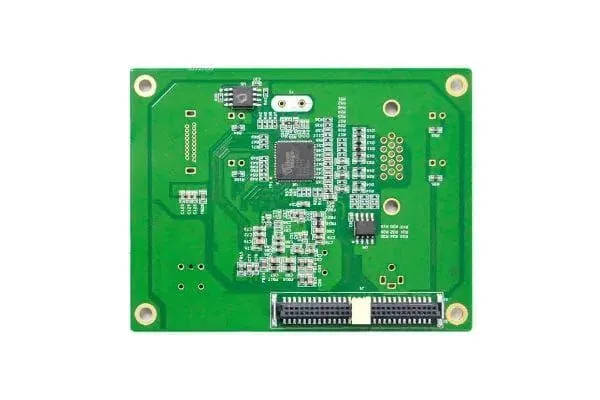
Turnkey vs Consigned PCB Assembly: What Each Model Actually Transfers
Choosing between turnkey, consigned and partial turnkey PCB assembly is not a decision about who buys parts cheaper. It is a decision about which risks move with material ownership and which three stay on your side no matter what you sign.
Read More →Aluminum PCB Assembly: Where the Thermal Mass Splits the Job and Who Owns Each Segment
An aluminum board with components on it is rarely one purchase. Its thermal mass separates fabrication, handover and assembly into segments that often sit with different parties, and some attributes stop being verifiable once parts are mounted. Here is how the segments divide, what evidence each one owes you, and what to capture before assembly starts.
Read More →
16-Layer Thick Copper PCB: Why Two Quotes Are Not Comparable Until the Stackup Is Locked
Same layer count, very different prices. "16 layers plus thick copper" leaves at least five stackup variables open, and each supplier fills them with its own cheapest assumption. Here is what to lock, where it goes in the RFQ, and how to recover the assumption behind a quote you already have.
Read More →
HDI PCB Manufacturing: What You Must Specify, What You Can Compare, What You Can Only Verify
HDI sourcing goes wrong when three different kinds of decisions get discussed as one. Here is which items you must declare yourself, which items are genuinely comparable across quotes, which can only be verified later, and what each becomes in the RFQ.
Read More →PCB Edge Quality Inspection: Writing a Sampling Plan a Rejection Survives
Most incoming rejections collapse not because the inspection was wrong but because the sampling was never agreed. What a bare-board sampling plan has to state, and how to settle retest samples and cost before the dispute.
Read More →Heavy Copper PCB Manufacturers: Who Approves a Mid-Production Deviation
On a live heavy copper order, the thing that stalls the line is rarely the technical call. It is finding the one person on the supplier side who is allowed to sign off. Here is what to ask before the PO and what an escalation path has to contain.
Read More →HDI PCB Engineering Queries: Which Answers You Cannot Take Back
A quote confirmation does not start production; closing the engineering query does. Learn which EQ answers hand design authority to your HDI PCB manufacturer permanently, what form a reply needs to stay enforceable at incoming inspection, and whose clock runs during the exchange.
Read More →Heavy Copper PCB Delivery Terms: Where Risk Transfers in the RFQ
Delivery terms decide more than who pays freight. For heavy copper boards, they fix the point where risk of loss moves to the buyer and who must prove when edge damage or warp occurred. Here is what to bind into the RFQ.
Read More →HDI PCB Warranty and RMA Scope: The Evidence Window
HDI boards usually fail after assembly, when the board has already been processed. Warranty terms decide which evidence each side must keep and for how long. Here is how to define RMA scope by defect type, time window and board state.
Read More →Bare HDI Board Shelf Life: Who Declares Solderability at Handover
Surface finish is a specification; solderability is a state that expires. Learn which dates, conditions and signatures must appear in the HDI RFQ and PO so the shelf life window is provable, and who owns rework when boards are stale.
Read More →Thick Copper PCB Quote Validity: Which Assumptions Expire and When the Price Reopens
A thick copper PCB quote carries six unwritten assumptions and a shelf life. Learn which inputs to freeze in the RFQ, which events void a quote, which changes only need engineering confirmation, and what to require in a price adjustment clause.
Read More →HDI PCB Prototype Service Scope: What Production Equivalence Did You Buy?
Prototype quotes for HDI boards differ mostly in how much production equivalence
Read More →HDI PCB Supplier Selection: Which Process Steps Are Not Done In-House
"We are an HDI manufacturer" describes order scope, not shop-floor boundaries. Here are the HDI steps most often subcontracted, how an outsourced step turns lead time into a relay, where liability breaks at the handoff, and the questions that surface step ownership before you award.
Read More →HDI PCB RFQ: Turning "For 5G Modules" Into Buildable Requirements
"HDI for 5G" is not a quotable requirement. This guide unpacks the five requirement
Read More →EMI Shielding Change Cost Ownership: Who Pays After an EMC Failure | PCB168
An EMC failure triggers changes at the most expensive point in the supply chain. This guide maps the four remediation routes to their change levels, the disposition of purchased material and WIP, retest and certification-slot costs, and the three sentences that assign ownership before you order.
Read More →Bare PCB Cosmetic Defects and Repair Disclosure: A Three-Tier Acceptance Framework | PCB168
Cosmetic defects and repaired boards are the two categories purchase contracts miss most often. Learn which visual attributes have a physical datum, which need tiering instead, what disclosure granularity each repair type requires, and how to write the escalation path into your PO.
Read More →Aluminum PCB Manufacturer Selection: The Mechanical Interface Nobody Declares
An aluminum PCB only works once it is bolted flat against a heatsink. Mounting holes, edge profile, backside flatness and the backside finish decide whether it ever gets there — and none of them are in your RFQ. Here is who declares each one and how to inspect it on arrival.
Read More →Ultra HDI PCB Manufacturer: The Label Nobody Defines the Same Way | PCB168
Two suppliers both say they do ultra HDI, and you still cannot tell them apart. Here are the four readings in circulation, the moment the mismatch surfaces, and the structural declarations to write instead of the label.
Read More →Heavy Copper PCB Manufacturers: What Your Qualification Actually Covers | PCB168
"We have used them before for heavy copper" is a record, not a qualification. Here is what bounds a heavy copper supplier qualification, which five events void it without anyone noticing, and the three lines that put its scope in writing.
Read More →HDI Fine Line Etching: Who Owns Trace Width Tolerance | PCB168
The trace width in your Gerber is not the trace width you receive. Etch compensation is the fabricator's parameter, not your design parameter. Here is how to freeze the acceptance basis, the measurement location, and the width-versus-impedance priority in your HDI RFQ.
Read More →16-Layer Thick Copper PCB: Writing the Board Thickness Tolerance Line | PCB168
Once layer count and copper weight are frozen, finished board thickness becomes a negotiated range, not a number you specify. This guide covers the datum, measurement locations, whether mask and finish count, and out-of-tolerance disposition — in PO-ready wording.
Read More →Aluminum PCB Manufacturer Quotes: Where Does the Scope Actually Stop? | PCB168
"Aluminum LED board" can mean a bare board, a populated board, a board with thermal interface applied, or an assembly already mounted to the fixture. Four deliverables, four acceptance bases, four liability maps. Here is how to write the boundary.
Read More →Heavy Copper PCB for Power Supply: The Voltage Inputs Your RFQ Is Missing
Heavy copper power supply RFQs specify current and copper weight, then stay silent on voltage. Here are the isolation inputs the buyer must declare, who marks safety-critical gaps, whether solder mask counts as insulation, and how to put hipot testing on the purchase order.
Read More →PCB Assembly & Contract Manufacturing: Component EOL and the Substitute Approval Clock | PCB168
When a part goes EOL or its lead time jumps mid-build, the damage comes from an approval with no deadline, not from the shortage itself. Here are the declaration-authority, proposal-completeness, response-window and default-path clauses to settle before the PO.
Read More →Heavy Copper PCB Failure Attribution: Evidence Retention Terms to Fix Before the PO | PCB168
Heavy copper boards usually fail after assembly or in service, by which point nobody can prove whose fault it was. This guide covers the evidence custody, disposition order, returned-sample completeness and third-party adjudication clauses to settle before the purchase order.
Read More →HDI PCB Incoming Acceptance: What You Cannot Verify at Receipt | PCB168
At incoming inspection an HDI board shows you its surface, not its risk. This guide splits HDI attributes into verifiable and unverifiable at receipt, explains why assembly destroys the evidence, and gives the RFQ wording for each release mechanism.
Read More →PCB Fabrication Specifications: What the Shipment Document Package Has to Prove
A certificate of conformance says "conforms" — to which revision of your spec, and to which box on the pallet? Four clauses that make the shipment paperwork a traceable identity instead of an attachment.
Read More →Heavy Copper PCB Assembly: Who Owns the Reflow Profile?
Heavy copper narrows the reflow window, yet almost no PO says who writes the profile. Four clauses that assign ownership, inputs, deliverables and change control before the first solder defect turns into an argument.
Read More →HDI PCB Electrical Test: What "100% Tested" Leaves Out of Your RFQ
"100% electrical test" is a verb, not an acceptance clause. On an HDI PCB it does not say which netlist, which structures, against what criteria, or whether coupons are included. Here are the four declarations that make the line quotable and enforceable.
Read More →HDI PCB Manufacturing Process: Who Absorbs Scrap and Who Owns the Delivered Quantity
Your HDI quote prices a unit; the factory schedules panels. This guide shows where scrap happens in the HDI process chain, how over-build and shortfall clauses shift that risk, and the exact RFQ lines that keep delivered quantity from becoming a negotiation.
Read More →Choosing an HDI PCB Supplier: Capability Is Not Capacity Allocation
A good HDI sample proves the process window opens. It does not prove a slot exists for your build. Here is how HDI queues actually work, the four things to verify before you single-source, and contract language that turns a verbal slot into a binding one.
Read More →Custom Heavy Copper PCB Quotes: What "Custom" Actually Covers
"Custom heavy copper" is a placeholder, not a specification. Sort every nonstandard requirement into quoted, engineering-confirmation-required, or outside-standard-tier — and write it into the RFQ before the PO, not after the change order.
Read More →Solder Joint Acceptance Class and Defect Disposition: What Your PO Has to Say Before a Batch Is Judged
A PCBA solder joint failure dispute is rarely about workmanship. It is about which acceptance class your PO cited, who holds disposition authority, and what evidence re-releases a reworked batch. Here is how to write all three.
Read More →Heavy Copper PCB Reorder: Which Tooling Actually Carries Over
A heavy copper reorder quote comes back higher than expected. Here is which tooling items are pinned to which design dimensions, why a copper weight change invalidates etch compensation even when the netlist did not move, and the ownership clauses to write before the first PO.
Read More →Moisture Sensitive Device Handling: Who Owns It in a PCBA Contract
In contract PCBA, moisture sensitive device handling is an obligation both sides assume the other holds, and its failures are invisible to inspection. Four responsibility boundaries to name in your PO.
Read More →Panel X-Out Allowance: The Quantity You Ordered vs the Units You Can Use
On array-format orders, panel count and usable unit count are two different numbers. Learn what an X-out allowance actually commits, the three terms buyers forget beside it, and how to count on arrival.
Read More →Controlled Impedance on an HDI Quote: Who Owns the Target Number
"Controlled impedance" is not an acceptable requirement on its own. Learn how stackup authority decides who fixes an out-of-spec board, what three quote wordings actually bind, and which impedance fields your RFQ must carry.
Read More →Qualifying a Second HDI PCB Supplier: Proving Build Equivalence
Adding a second HDI supplier is not a re-quote. It is a second definition of the same board. Learn how to freeze the build definition, grade equivalence, and demand one comparable evidence set from both suppliers.
Read More →Heavy Copper PCB Laminate and Tg: What to Declare Before Someone Else Decides
On heavy copper boards the base material is not a blank field. Learn why copper weight drives resin demand and thermal history, what to declare about laminate and Tg in your RFQ, and how to read the material line in returning quotes.
Read More →Who Owns the Test Fixture? Cost Split in Contract PCB Assembly
Paying the fixture NRE does not make the fixture yours. See how ownership, storage, maintenance, revision and transfer have to be written separately into a contract assembly PO before the day you change suppliers.
Read More →Turnkey PCBA Material Attrition and Overage: Who Owns the Extra Parts
Turnkey quotes count parts three different ways, and the gaps between them decide your final invoice. See how to make a contract manufacturer declare attrition, overage and leftover-stock ownership before the first reel is opened.
Read More →6oz vs 8oz Heavy Copper PCB: What Changes When You Step Up Copper Weight
Stepping from 6oz to 8oz heavy copper is not a safety margin you buy for free. See the trade-offs that move together, how to derive the step from current and thermal budget, and how to freeze it in the RFQ.
Read More →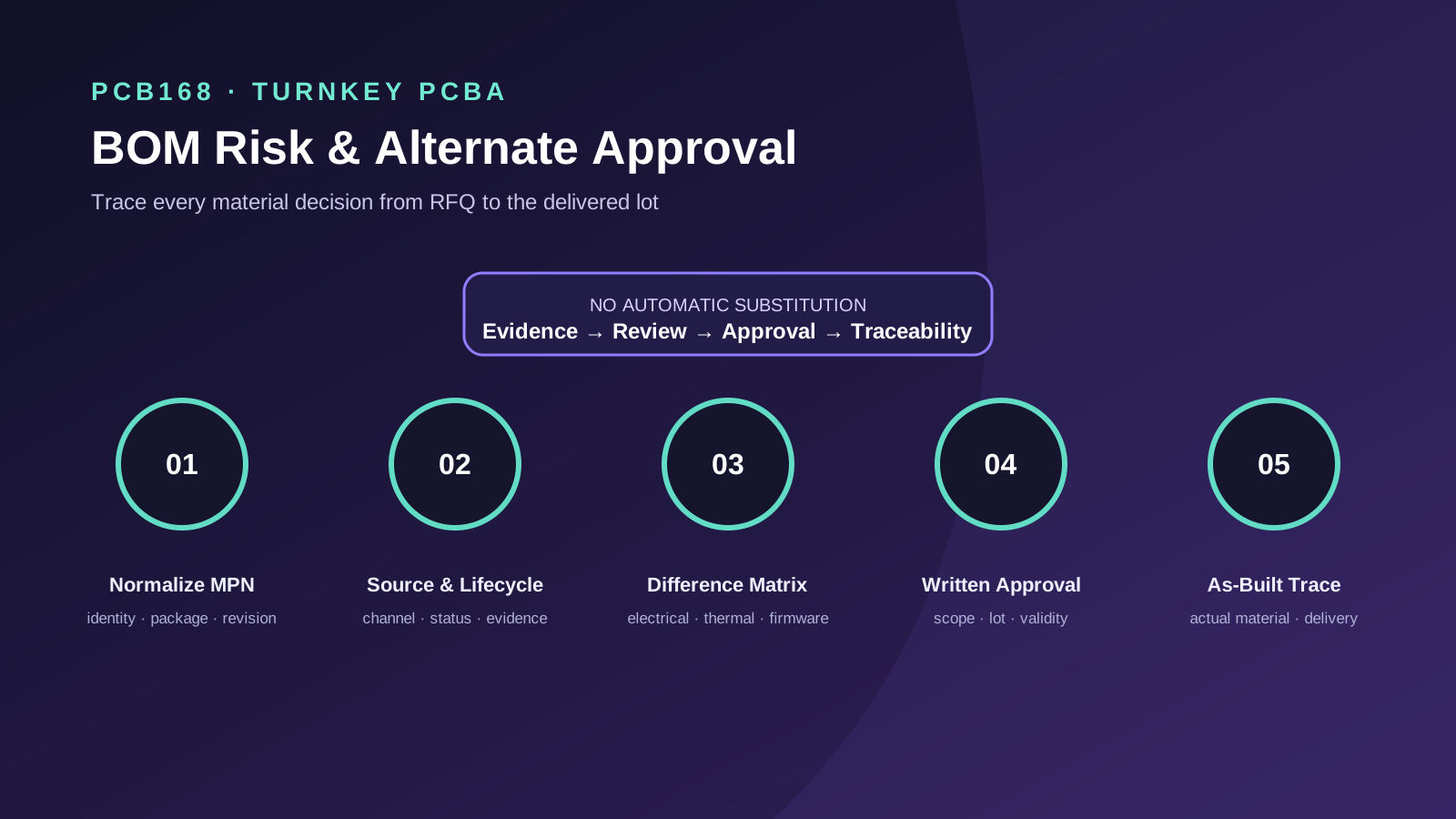
PCBA Packaging, ESD and Transit Protection: The PO Requirements Buyers Forget
Most PCBA purchase orders specify how the board is built and tested, then go silent on how it is packed and shipped. Here are the six packaging and transit requirements to write into the PO, and how to prove damage on receipt.
Read More →HDI PCB Tooling and NRE Charges: Who Owns What You Paid For on the Reorder
A first-order NRE charge is not one indivisible tooling fee. See how to itemise HDI tooling deliverables, define who owns them, and write the validity and waiver terms that decide what your reorder invoice looks like.
Read More →Heavy Copper PCB Lead Time: How to Turn a Quoted Date Into a Commitment You Can Hold
A quoted lead time is only as good as the assumptions behind it. Learn how to break a heavy copper PCB schedule into a defined start point, milestones, preconditions and reschedule triggers you can write into the PO.
Read More →Heavy Copper PCB Via Current Capacity: Three RFQ Inputs Copper Weight Does Not Cover
Your conductor copper weight governs in-plane traces. Where current changes layers it runs on barrel plating, and three inputs that decide that barrel are usually missing from the RFQ. Here is what to declare, who owns it, and how it gets proven at acceptance.
Read More →HDI PCB Panel Utilization and Array Format: The Cost Multiplier Hidden in Your Quote
Your HDI unit price is not calculated from your board's area. It is calculated from how much production panel area your board consumes, and that depends on an RFQ field most buyers leave blank. Here is what to declare and what to ask.
Read More →Finished Hole Size vs Drill Size: What Your PCB Drill File Actually Specifies
A drill file states tool diameter, but your PO accepts finished hole size. Learn how to declare PTH/NPTH, where hole tolerance is binding, and the HDI laser via exception.
Read More →PCB Assembly Data Package: CPL Coordinates, Polarity and Panel Fiducials
Your BOM and Gerbers do not state where (0,0) is, which way a diode faces, or who defines the panel. See exactly what to declare for centroid data, part polarity and panel fiducials in a PCB assembly RFQ.
Read More →Heavy Copper PCB Surface Finish: Why One Board-Level Entry Is Not Enough
Heavy copper changes which surface finishes are actually available. See how HASL, ENIG, OSP and immersion tin behave on thick copper, and how to declare finish per pad group in your RFQ.
Read More →Via-in-Pad on HDI PCB: Filled and Capped Are Two Different Declarations
"Via-in-pad: filled and capped" hides four separate decisions. Learn what an HDI PCB RFQ must state about fill type, cap plating, pad flatness and which pads are affected.
Read More →Heavy Copper PCB, Busbar or Copper Inlay: Choosing the High-Current Carrier
The amp target does not pick your carrier. Distance on board, whether the joint must be serviceable, and how much fine routing shares the board do. A decision boundary for power supply PCBs.
Read More →Is a 4 oz Copper PCB Standard or Heavy Copper? Where the Threshold Sits
4 oz copper sits on the heavy copper side of a published 3 oz threshold. Crossing it swaps your entire design baseline: minimum line width, layer ceiling, thickness floor and impedance tolerance all move at once.
Read More →HDI PCB Build Class: Which Specification Decisions Are Yours, Which Belong to the Fab
An HDI build class like 1+N+1 or 4+N+4 is back-calculated from three facts you own: BGA pitch, the layer pairs that must connect, and your thickness ceiling. Here is what to declare in the RFQ and what to leave to the fab.
Read More →HDI PCB Surface Finish: What to Declare for Fine-Pitch and Via-in-Pad
The four finish options buyers copy off a capability page belong to the standard-PCB table. The HDI table lists via-in-pad filled and capped instead. How to declare finish, coplanarity and solderability life so a 0.4mm pitch BGA lands.
Read More →Solder Mask Over Heavy Copper: The RFQ Line Buyers Forget to Write
On heavy copper boards the mask has to climb a conductor far taller than a standard board. Surface finish is not the same field. How to declare must-cover, intentionally-bare and sidewall coverage so the board you receive is the board you can assemble.
Read More →6oz and 8oz Heavy Copper PCB: What Copper Weight Does to Trace Width and Spacing
Picking a copper weight does not settle trace width and spacing. Heavier copper raises the minimum width a process can hold, etch compensation is the supplier's action on production artwork, and spacing is a separate field. What to add to a heavy copper RFQ.
Read More →PCBA First Article Inspection Report: Which Rows Are Release Criteria and Which Are Just Records
An FAI report can be a release baseline or a filing-cabinet PDF, and the difference is decided at PO time, not at dispute time. Here is how to mark which rows bind, which revision the report anchors, and who carries the burden of proof on later batches.
Read More →HDI PCB Aspect Ratio and Thin Cores: Why Adding Layers Is Sometimes Cheaper Than Going Thinner
Buyers treat "thinner board" and "fewer layers" as the same saving. They are not. Once finished thickness drops, through-hole aspect ratio and thin-core handling become the binding limits, and adding two layers can be the cheaper build. Here are the numbers to settle before you send the RFQ.
Read More →HDI PCB Layer Registration and Annular Ring: The Two Numbers Buyers Forget to Put in the RFQ
Every HDI supplier answers yes to layer count, line width and via structure. Two numbers decide whether the board is actually buildable: layer-to-layer registration and finished annular ring. Here is who owns each, which RFQ field it belongs in, and how to grade a supplier answer that commits to nothing.
Read More →Heavy Copper PCB Manufacturers: The Order to Screen Them In | PCB168
A search for heavy copper PCB manufacturers returns pages, not capabilities. This guide gives the screening order — which filter to apply first, how to read a published capability range without being misled by its maximum, which information only proves a factory exists, and the questions no website can answer.
Read More →PCB Assembly Contract Manufacturing: Who Owns the Material When Parts Run Short | PCB168
In PCB assembly contract manufacturing, material ownership is a set of transfer moments on a timeline, not a contract label. See when purchase authority takes effect, who decides on alternates, and who pays for the idle line while everyone waits for parts.
Read More →Heavy Copper Multilayer PCB: How to Declare a Layer-by-Layer Copper Weight Table in Your RFQ | PCB168
A "16-layer 6oz heavy copper" RFQ can mean two completely different boards. Learn how to write a layer-by-layer copper weight table, which layer-count and copper-weight combinations quote directly, and which need written feasibility confirmation first.
Read More →Aluminum Base PCB With 3oz Copper: 6 Extra RFQ Inputs | PCB168
Putting heavy copper on an aluminum base moves the thermal bottleneck from the copper to the dielectric, and shrinks the quotable range to the intersection of two spec pages. Here are the heat-source, mounting, line-width, layer and assembly inputs your RFQ has to add, plus a template.
Read More →HDI PCB for Tablets vs Wearables: Build Selection and RFQ Inputs | PCB168
Wearables and tablets push HDI in opposite directions - one locks outline and thickness first, the other locks area and part density first. Here is how to pick HDI build-up level from end-device parameters, plus the RFQ inputs that keep your package out of feasibility review.
Read More →Heavy Copper PCB Mechanical Strength: What to Put in the RFQ | PCB168
Heavy copper adds conductor cross-section, not laminate stiffness. Here are the five structural consequences copper weight actually changes - warp, thickness budget, depaneling, fastening interfaces, hole life - and the five RFQ lines that make them quotable.
Read More →Heavy Copper PCB Repeat Orders: What Counts as a Change and Who Approves It
Your first heavy copper lot passed. From lot two onward, six things can still change without breaking the specification sheet. Here is how to tier them into notify, approve, and requalify, and the clause wording that holds.
Read More →Cheap HDI PCB Quote: Which Build Did the Supplier Assume?
A low HDI quote is often a different build, not a better price. Check the seven places a supplier can quietly assume an easier structure, and the wording that locks each one before you compare.
Read More →Heavy Copper PCB Order Quantity and Panel Form: When a Price Break Is Real
Doubling a heavy copper PCB order does not halve the unit price. See which costs move with quantity, which never do, and where the price ladder stops.
Read More →Contract Manufacturing PCB: Who Owns the Defect When Fabrication and Assembly Are Split
Splitting bare board and assembly across two suppliers splits your accountability too. This guide maps the four responsibility lines — procurement, incoming inspection, defect attribution, rework liability — and what to fix in the contract first.
Read More →Heavy Copper PCB Cost: How to Compare Quotes That Differ by Two to One
The same heavy copper data package can come back with quotes twice as far apart as you expect. This guide separates real process cost from assumption gaps, and shows how to normalise heavy copper PCB quotes before you compare them.
Read More →HDI PCB Manufacturing Capability Tiers: How to Verify What a Supplier Can Actually Build
"We can do HDI" covers at least four different capability tiers. This buyer guide breaks HDI PCB manufacturing into verifiable tiers, shows what gets locked down at each step up, and lists the evidence to request from a supplier instead of taking a claim at face value.
Read More →PCB Fabrication Specifications: Writing a Sheet That Binds the Quote
A price is only as binding as the sheet it was quoted against. See the four things every field needs — value, method, criterion document, priority — with worked examples, the vague phrases that hand the decision back, and how to reconcile the quote when it returns.
Read More →HDI PCB for Automotive Electronics: Qualification Documents to Request at RFQ Stage
ISO 9001 does not mean a fabricator can run an automotive approval flow. Here are the four document classes to request before you shortlist an HDI or heavy copper supplier, what each one proves, and what it does not.
Read More →Heavy Copper PCB Prototype: What Your Sample Order Already Locked In for Production
A heavy copper prototype order is also a commercial anchor. Copper weight by layer, the 6mil line width, panel form and the records you did not request all carry into production — here is what to freeze before you sign the sample PO.
Read More →HDI Microvia Structure in an RFQ: Stacked or Staggered, and What Else to Declare
"Laser drilled microvia" is not a specification. The four fields that make HDI hole structure comparable across quotes, how much granularity procurement should fix, and what engineering has to backfill in the written quote.
Read More →12 or 16 Layer HDI PCB: How Layer Count Sets Your Lamination Cycles
Writing "16 layer HDI" in an RFQ also writes a lamination sequence. How 1+N+1 to 4+N+4 converts layer count into press cycles, why one layer count can be two different quotes, and what to do outside the published 4–20 band.
Read More →HDI Base Material in Your RFQ: FR-4, BT or ABF, and How Far to Specify
"FR-4 or equivalent" hands your HDI build decisions to whoever prices it. See how far to specify the base material, which design evidence to send, and what the declaration locks down.
Read More →PCB Quality Inspection: Defining Inspection and Test Requirements Before You Get Quoted | PCB168
Inspection added after the quotation is a cost change. Define who requests each check, which document holds the criteria, what record is delivered, and who adjudicates a reject — for both bare board and assembly — before your PCBA RFQ goes out.
Read More →Industrial Heavy Copper PCB: Turning Operating Environment Into a Quotable RFQ Declaration | PCB168
"Industrial grade" and "automotive" are not quotable inputs. See which operating-environment items a fabricator actually consumes at quotation, which must first be translated into material and structure, and which can only be closed by customer-defined tests.
Read More →Heavy Copper PCB for Power Supply: Defining the High-Current Connection Interface in Your RFQ | PCB168
A high-current board is quoted and accepted at its connection interfaces. Learn what to declare for screw terminals, busbar contact faces, press-fit holes, parallel via arrays and power-device pads before you release a heavy copper PCB RFQ.
Read More →Incoming Inspection Acceptance Plan for PCB Delivery: Who Sets Sampling, Criteria and Rejection
Receiving inspection arguments are won or lost at PO time. Learn how to write a PCB incoming inspection acceptance plan that names the sampling basis, the criteria document, the measurement method for each attribute, and who decides between rejection, rework and use-as-is.
Read More →PCB Finished Copper Thickness vs Base Copper: What Your 4oz Callout Actually Means
The "4oz" on your drawing is at least three different numbers. Learn what base copper, plated copper and finished copper each name, where each gets measured, and the exact PO and fabrication-drawing wording that decides which one you get accepted against.
Read More →HDI PCB or Conventional Multilayer? The Decision to Settle Before You RFQ
Not every dense board needs HDI. Compare PCB168's published HDI and multilayer capability lines across five decision inputs — BGA pitch, escape channels, board outline, layer ceiling and impedance tolerance — and see which side your build actually lands on.
Read More →PCB Shielding Cans: Splitting Supply and Assembly Responsibility in the RFQ
A buyer-side guide to quoting PCB shielding cans. Covers who supplies the can and frame, which board-side features you must declare, surface finish and solderability knock-on effects, and who is authorised to open a can for rework.
Read More →Aluminum PCB RFQ Inputs: Declaring the Thermal Path So It Can Be Quoted
A buyer-side guide to the four aluminum PCB parameters that can be quoted and the ones that cannot. Covers dielectric conductivity, aluminum thickness, copper weight, layer limits and the size figures you must confirm.
Read More →HDI PCB Prototype Quoting: Which Costs Never Amortise
What an HDI PCB prototype quote actually pays for, which charges are per-run instead of per-piece, and the validation worth buying once so a low-volume ramp does not restart tooling.
Read More →Heavy Copper PCB for Power Supply: Deriving Copper Weight From Current and Rise
You know your current. You do not know whether to specify 3oz or 6oz. Work backwards from peak current, duty cycle, ambient and allowed temperature rise to a copper weight and trace width you can put in an RFQ.
Read More →Heavy Copper PCB Manufacturers: 6 Process Evidence Requests Before You Award
Three heavy copper quotes at the same price can hide three different process assumptions. Six falsifiable evidence requests that separate manufacturers who have built heavy copper from those who are only taking the order.
Read More →PCB Design Services Outsourcing for HDI Boards: Who Owns DFM
Outsourcing HDI layout works. Outsourcing the stackup and via structure decision does not. Here is how to split decision rights, DFM responsibility, file ownership and change approval before kickoff.
Read More →Thick Copper Multilayer PCB: Layer Count and Copper Weight Limits
3oz-20oz copper, 1-16 layers and 0.8-6.0mm thickness are three separate published ranges, not three dials you can max out together. Here is how they constrain each other and which combinations need a feasibility check before RFQ.
Read More →HDI PCB Fine Line Etching: RFQ Inputs That Make 2mil Quotable
Asking for 2mil fine line etching is not a quotable input on its own. Here are the five RFQ fields a fine line HDI PCB supplier needs, what gets fixed at quote stage, and what has to wait for engineering review.
Read More →HDI PCB for 5G Modules, Handsets and Automotive: What Changes in Your RFQ
The same request for "HDI" produces different quotes depending on your end product. Here is which RFQ input each application makes mandatory, what suppliers ask first, and how to build a one-page input sheet.
Read More →PCB Edge Quality Inspection: V-Cut, Routed Edge and Burr Acceptance Criteria
Board edge defects are the most common receiving-inspection argument because most POs never define them. Here is how to write V-cut residual thickness, routed edge burrs, edge delamination and plated edges into terms both sides can inspect against.
Read More →HDI PCB vs IC Substrate: Which One Is Your RFQ Actually For?
Fine lines and microvias do not automatically make your design an IC substrate. Here are the measurable features that decide whether to quote it as a high-end HDI PCB or a substrate-class carrier, and what each RFQ must contain.
Read More →HDI PCB Supplier Qualification: Capability Evidence to Request Without a Site Visit
Cannot audit the factory in person? This guide covers how to ask capability questions at the right granularity, which structural evidence (coupons, cross-sections, plating records) to request, how to verify process control and change notification, and how to score a defensible HDI shortlist.
Read More →PCBA Quote Comparison: Aligning Scope Boundaries and Hidden Charges
PCBA quotes are usually incomparable because scope was never defined, not because someone quoted high. Break down supply model, NRE, test scope, attrition, freight terms and validity to normalise them.
Read More →HDI PCB Cost Drivers: Where Quotes Differ and What You Can Relax
HDI quotation gaps rarely come from board price alone. Learn how lamination cycles, microvia structure, line-width yield and panel utilization drive cost, and which specs are negotiable.
Read More →Turnkey PCBA BOM Risk Management and Alternate Part Approval Checklist
Control a turnkey PCBA BOM from MPN and lifecycle review through source rules, alternate-part comparison, written approval, lot traceability and delivery closure.
Read More →Heavy Copper PCB Purchase Specification and Acceptance Evidence Guide
Build a heavy copper PCB purchase specification that connects current and thermal inputs to finished copper definitions, geometry, inspection evidence and change closure.
Read More →HDI PCB Quote Package Checklist: Stackup, Microvias and Acceptance Inputs
Prepare an HDI PCB RFQ that suppliers can review consistently. Cover revisions, microvia spans, stackup, impedance, finish, quantities, inspection and quotation assumptions.
Read More →
PCB Fabrication Notes Checklist for Conflicting Files
Resolve conflicts among Gerber data, drill tables, stackup drawings, mechanical notes and purchase requirements with a controlled clarification workflow.
Read More →How to Review an Outer Layer PCB Etching Defect Report
A design and procurement checklist for reviewing under-etch, over-etch, opens, shorts, Gerber evidence, batch distribution, containment, and corrective action.
Read More →Single-Sided Sensor Board Layout: Signal, Return and Jumper Checklist
Plan a single-sided sensor module around its signal chain, return current, decoupling, external interfaces and controlled jumpers, then know when to compare two layers.
Read More →PCBA Solder Joint Failure Causes and Troubleshooting
A practical framework for diagnosing wetting, bridging, voiding, cracking, and thermomechanical solder-joint failures using design, process, and physical evidence.
Read More →PCB Manufacturing Process Guide: From Gerber Data to Finished Board
Understand the major PCB fabrication stages from data review and imaging through lamination, drilling, metallization, patterning, finish, profiling, and final inspection.
Read More →PCB Assembly Process Guide: From File Review to Acceptance
A decision-focused PCB assembly workflow covering file review, material preparation, printing and placement, soldering, inspection, testing, and delivery records.
Read More →EMC Shielding PCB Design Guide: Shielding Cans, Bonding, and Chassis Grounding
When PCB layout optimization alone cannot pass EMC testing, physical shielding is the last and most effective line of defense. This guide covers shielding can selection, bonding impedance, aperture leakage, gaskets, and chassis grounding for EMC shielding PCB design to pass radiated emission and immunity certification on the first attempt.
Read More →5 Reasons to Choose a Domestic PCB Supplier Amid Tariff Shifts — 2026 Electronics Supply Chain Strategy
With US tariffs on Chinese PCBs surging to 45% in 2025-2026, the global supply chain landscape is shifting dramatically. For domestic electronics manufacturers, this presents a strategic window to secure premium capacity and optimize procurement costs. This article analyzes five key reasons to deepen domestic PCB supply chain partnerships.
Read More →Why AI Servers Demand Heavy Copper PCBs — Big Current PCB Design Trends from NVIDIA's Rubin Platform
As NVIDIA's Rubin platform pushes single-card power consumption beyond 1000W, AI servers demand unprecedented current-carrying capacity from PCBs. This article analyzes why 3oz-20oz heavy copper PCBs are becoming essential infrastructure for AI computing.
Read More →Medical Device PCB Design and Manufacturing Standards Explained
Medical devices demand PCB reliability, cleanliness, and traceability far beyond consumer electronics. This article details IPC Class 3 standards, ISO 13485 systems, material selection, cleanliness control, and reliability design for medical PCBs.
Read More →5G mmWave PCB Design Challenges and Solutions
5G millimeter-wave (24-100GHz) presents unprecedented challenges for PCB design. This article analyzes material selection, loss control, antenna integration, and AiP packaging for mmWave frequencies, providing systematic guidance for 5G product PCB design.
Read More →PCB EMC Design: EMI Shielding and Anti-Interference Layout Practices
Electromagnetic compatibility (EMC) is a mandatory certification requirement for electronic products. This article covers EMI shielding design, grounding strategies, filter layout, and high-speed signal isolation at the PCB level to help products pass EMC testing on the first attempt.
Read More →Complete PCB Via Design Guide: Through-Hole, Blind, Buried, and Microvias
Vias are the core interconnect elements in multilayer PCBs. This guide covers through-hole, blind, buried, and laser microvias — their structures, manufacturing processes, design rules, and applications, plus back-drilling and via-fill plating techniques.
Read More →Complete Guide to PCB Thermal Management: From Metal Core to Embedded Thermal Solutions
High-power LEDs, power modules, and power semiconductors demand superior PCB thermal management. This guide covers aluminum substrates, copper substrates, heavy copper thermal relief, thermal via arrays, and thermally conductive fills to help engineers choose optimal thermal solutions.
Read More →Key Points of PCB Impedance Control Design
A comprehensive analysis of PCB impedance control design principles, calculation methods, and manufacturing requirements, covering single-ended, differential, and coplanar waveguide structures.
Read More →High-Frequency PCB Material Selection and Design Guidelines
An in-depth analysis of high-frequency PCB substrate key parameters and selection methods, covering Rogers, PTFE material comparisons and recommendations for 5G and radar applications.
Read More →Complete Guide to PCB Quality Inspection Methods
A systematic introduction to PCB quality inspection methods including AOI, X-Ray, flying probe testing, and microsection analysis for comprehensive quality assurance.
Read More →Flex PCB Application Scenarios and Design Guide
An in-depth guide to flexible PCB (FPC) materials, design guidelines, and typical applications across smartphones, wearables, automotive electronics, and more.
Read More →PCB Surface Finish Comparison and Selection Guide
A comprehensive comparison of HASL, ENIG, OSP, Immersion Silver, and Immersion Tin surface finishes, helping engineers select the optimal solution for their products.
Read More →FR4 vs Rogers Substrate Selection Guide
A comprehensive comparison of FR4 and Rogers PCB substrates covering performance characteristics, application scenarios, and cost differences to help engineers make optimal material choices.
Read More →HDI PCB Manufacturing Process: Microvia and Buried Via Technology Explained
An in-depth look at HDI high-density interconnect PCB manufacturing, covering microvia, buried via, and laser drilling technologies.
Read More →Multi-Layer PCB Stackup Design Guide
A comprehensive guide to multi-layer PCB stackup design principles and practices, covering 4-layer, 6-layer, 8+ layer structures, impedance control, and signal integrity optimization.
Read More →Automotive PCB Design Essentials: Meeting IATF 16949 Quality Standards
Automotive electronics demand extremely high PCB reliability. This article covers automotive-grade PCB design essentials and IATF 16949 requirements.
Read More →PCB Industry Trends 2026: AI, New Energy, and Advanced Packaging
The PCB industry enters a new growth cycle in 2026, driven by AI computing demand, new energy vehicle expansion, and advanced packaging technologies.
Read More →