HDI PCB Warranty and RMA Scope: The Evidence Window
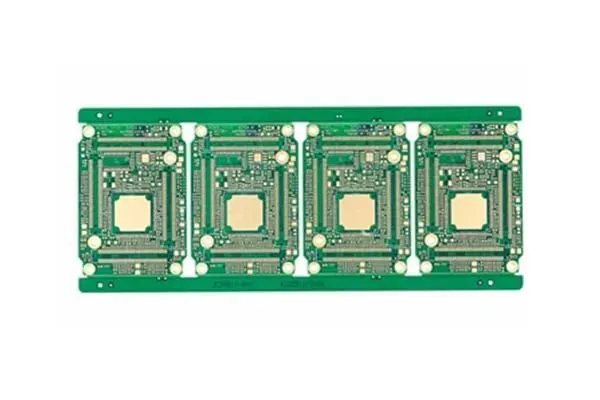
A warranty on a bare board is a promise about something you will destroy
Every other product you buy under warranty is still recognizably itself when it fails. A bare HDI panel is not. Between delivery and failure it gets baked through reflow once or twice, separated from its panel, populated with hundreds of parts, possibly reworked with a hot air gun, conformal coated, screwed into an enclosure and shipped to an end customer. By the time anyone says "the board is bad," the thing in your hand has been through more thermal and mechanical processing than it saw at the fabricator.
That is the structural problem this article is about. It is not that suppliers are unwilling to stand behind HDI work. It is that a warranty claim on a processed board is an argument about history, and history has to have been recorded while it was happening. Nobody can reconstruct it afterward.
So the clause that matters in an HDI purchase agreement is usually not the one that says how long the warranty runs or what percentage gets credited. It is the one that says who keeps what, and until when.
Why HDI specifically, and not boards in general
Three properties of HDI construction push failures past the point where attribution is easy.
The interconnect that fails is buried and small. Stacked or staggered microvias, laser-drilled holes, and the via-in-pad structures that make HDI routing possible are internal features. A barrel separation or a pad lift at the bottom of a microvia is not a surface defect you can photograph. Finding it requires cross-sectioning, which destroys the sample, or x-ray, which is interpretive. Either way the first look is already a one-way door.
The failure signature is thermally triggered and intermittent before it is permanent. A marginal microvia interface can pass every test at the board house, pass incoming inspection, pass ICT, and then open up at temperature in the field — then close again when it cools. That means the failure often appears in service, far from both parties, and with a symptom that is hard to capture on demand.
Assembly applies exactly the stress that would reveal a latent weakness. Reflow is a thermal cycle. A board with a latent interface problem may well fail during assembly rather than before it. This is why "it failed at assembly" is not evidence either way: the same observation is consistent with a defective board that assembly merely uncovered, and with a sound board that an out-of-window reflow profile damaged.
Put those together and you get the asymmetry that drives most HDI warranty disputes: the buyer holds the failed part and the symptom, the supplier holds the manufacturing records, and neither alone can establish what happened. The clause has to force both halves to survive long enough to be put side by side.
Define RMA scope on three axes, not one
Most purchase orders define warranty with a single number — a period. A period alone leaves the two harder questions open, and those are the ones a dispute actually turns on. Scope needs three axes, stated separately.
Axis 1 — Defect type: what counts as a board defect at all. The useful split is not "defective / not defective" but by attribution class:
- *Fabrication attributes* — things determined entirely at the board house and not alterable downstream: internal layer registration, microvia formation and fill, plating integrity in the barrel, laminate integrity, impedance as built, final finish as applied.
- *Shared-boundary attributes* — things where both sides contribute: solderability (supplier applies the finish, buyer controls storage and reflow), flatness (supplier builds it, buyer's storage and process can change it), pad adhesion (supplier builds it, buyer's rework can destroy it).
- *Downstream attributes* — things determined after delivery: solder joint quality, component selection and placement, thermal profile, handling damage, depanel stress.
A clause that does not name which class a claim falls into forces the whole argument to happen inside the word "defect." Naming the classes up front means a claim starts with the much narrower question of which class applies, and that question is often answerable from records.
Axis 2 — Time window: what event starts the clock, and how many clocks there are. There are at least three distinct periods, and conflating them is a common and costly mistake:
- The *inspection window* for things visible on arrival, running from a stated delivery event.
- The *assembly window* within which the buyer is expected to have consumed or at least examined the boards — relevant because board condition genuinely does change in storage.
- The *warranty window* for latent defects, running from delivery or from a stated milestone, during which a claim may be opened at all.
Each needs its own starting event, and the starting event needs to be a document, not an impression. "From date of delivery" is only usable if both sides agree which document fixes that date.
Axis 3 — Board state: what condition the returned article may be in. This is the axis almost nobody writes down and the one that sinks the most claims. The supplier's ability to confirm a fabrication defect depends on what has been done to the board. State the tiers explicitly:
- Unprocessed bare board from the original packaging — the strongest position for both sides, because fabrication attributes can be measured directly.
- Assembled but unreworked — attribution still viable, with the reflow record.
- Reworked, cut, desoldered or coated — attribution weakens sharply, and the clause should say in advance what still remains in scope here rather than leaving it to be argued once it has happened.
- Already cross-sectioned or otherwise destructively analyzed by one side alone — frequently out of scope entirely, because the counterparty can no longer verify anything.
Writing these tiers into the PO is not a concession. It tells the buyer, before anything fails, that the first instinct in a failure — cut it open and look — can close the claim.
Evidence is perishable, and the perishable half is yours
Both sides hold records that decay, but they decay differently.
On the supplier side, the records are documentary and tied to a lot: the production traveler, electrical test results, AOI and inspection records, cross-section coupons where the build calls for them, material and lot traceability, the certificate of conformity. These persist exactly as long as the supplier's retention policy says and not one day longer. If a claim arrives after the records are gone, the supplier cannot defend the lot even if the lot was good — which, from the buyer's side, means a claim with no counterparty records is unlikely to be honored.
On the buyer side, the records are physical and situational, and they evaporate on their own: the as-received condition of the packaging, the moisture indicator state at opening, the opening date, the storage environment, the reflow profile actually run, the assembly yield on that lot, which panel position each failed unit came from, and crucially the failed part itself in the state it failed in.
The asymmetry worth internalizing: supplier evidence has an expiry date you can ask about in advance; buyer evidence has no expiry date because it was never created unless someone decided to create it. Most failed HDI claims fail on the second category, not the first.
Two practical consequences for the RFQ. First, ask what the retention period is for production records and traceability, and make sure the warranty window you agree to does not outlast it — a warranty that runs longer than the records behind it expires silently partway through, and neither side notices until a claim arrives. Second, agree that lot and panel-position traceability will be maintained and supplied, because without it a field failure cannot be tied back to anything.
Capture evidence before the first irreversible step
The sequence here matters more than the completeness. Anything non-destructive has to happen before anything destructive, because the destructive step cannot be undone and cannot be shared.
Before touching the failed article:
- Photograph it as found, both sides, with enough context to show the assembly and any visible damage, rework or coating.
- Record the identifiers: lot code, panel position if marked, date code, PO and delivery reference.
- Record the symptom as observed, including the conditions under which it appears and disappears — temperature dependence and intermittency are themselves diagnostic and they do not survive in memory.
Before any destructive analysis:
- Notify the supplier and agree, in writing, who performs the analysis and who witnesses it. A cross-section performed unilaterally is evidence to the party who performed it and an assertion to everyone else.
- Agree the method. Electrical isolation of the suspect net, x-ray, and thermal cycling to reproduce the fault are non-destructive and should be exhausted first.
- Preserve retained samples from the same lot, unprocessed where possible. A good board from the same lot is often the most informative single artifact in the whole dispute, and it is usually available only if someone thought to hold one back.
From the assembly process, pull before it rolls off:
- The reflow profile actually run on that build, not the nominal recipe.
- The storage and handling history of that lot, including unpacking and any rebagging.
- The yield and failure distribution on that lot, since a defect clustered by panel position points at fabrication and one scattered randomly usually does not.
That last point is the most useful single piece of analysis a buyer can do unilaterally. Position-correlated failures are a fabrication signature; randomly distributed failures across positions rarely are. It costs nothing but recordkeeping, and it is persuasive.
What to put in the RFQ, split by who fills it in
The point of splitting by filler is that each side can only commit to what it controls. A block written as one undifferentiated list tends to get answered as a whole or ignored as a whole.
The buyer states (so the supplier can price the exposure realistically):
- The end application class and the field environment, in general terms — thermal cycling exposure matters to microvia reliability and the supplier should know whether the board lives in a cabinet or on an engine.
- Whether assembly is in-house or at a third party, and whether the buyer can supply reflow records on request. If the answer is no, say so now; it changes what attribution is possible later.
- Whether boards may be stored before assembly, and roughly how long, since that bears on the shared-boundary attributes.
- Whether depanelization is performed by the buyer, and by what method.
- Whether the buyer will retain unprocessed samples per lot.
The supplier states (so the buyer knows what the warranty is actually worth):
- The retention period for production records, test data and traceability, per lot.
- What lot and panel-position identification is applied to the delivered boards, and where it appears.
- What test coverage is performed as standard, and what is available on request — a warranty is only as strong as the records behind it.
- Whether coupons are produced and retained for the build, and for how long.
- What the supplier requires in a returned article in order to analyze it, and what conditions make analysis impossible.
- The notification route for opening a claim, and what the first response contains.
Both sides sign (so the three axes are fixed before anything fails):
- The defect-class definitions, naming which attributes are fabrication, shared-boundary and downstream.
- The three windows and the document event that starts each one.
- The board-state tiers and what remains in scope at each tier.
- The destructive-analysis protocol: notification, who performs, who witnesses, who holds the remains.
- The disposition routes available on a confirmed claim, and the mechanism for agreeing which one applies.
- Whether a claim on a lot pauses the window on the remaining inventory of that lot.
That last item is small and frequently decisive. A field failure typically appears after most of the lot has already been consumed, and if the clock keeps running on the unconsumed remainder while the first claim is being investigated, the buyer can win the argument and still be out of time on everything else.
Three failures, and where they land when the clause is thin
A board opens intermittently at temperature in the field, more than a year after delivery. With no stated warranty window, no retention commitment and no retained samples, the supplier's records for that lot may simply be gone, and the only physical evidence is one assembled unit that has been in service for a long time. The loss generally stays with the buyer — not because the board was sound, but because nothing remains that could show otherwise. With a window, a retention commitment that outlasts it, position traceability and a retained unprocessed sample from the same lot, the same failure is a tractable engineering question.
Assembly yield drops on one lot, concentrated in two panel positions. This is the most winnable case and the most often lost. If panel position was never marked or never recorded at assembly, the clustering — the single strongest indicator of a fabrication cause — cannot be demonstrated, and the discussion collapses into reflow profile versus board quality with no tiebreaker. If position is identified on the board and recorded at assembly, the distribution speaks for itself.
A buyer cross-sections a failed unit, finds a microvia separation, and sends the photographs. Without a destructive-analysis protocol, the supplier is entitled to point out that the sample no longer exists in verifiable form, that the separation could have been produced by rework or by the sectioning itself, and that nothing independent confirms the finding. The buyer did the right diagnostic work in the wrong sequence. Under an agreed protocol — notify, agree method, witness or joint analysis — the identical finding carries weight.
The common thread: in all three, the technical reality was knowable and the clause determined whether anyone could show it.
Scope note
This article describes how warranty and RMA terms interact with evidence retention as a commercial mechanism. It is not legal advice and does not interpret any particular contract; the governing law and the specific wording of your agreement determine actual rights and obligations. Where standards are named — IPC-A-600 for acceptability of printed boards, the IPC-6012 and IPC-6016 series for performance and qualification requirements including HDI constructions, IPC-7095 for BGA assembly considerations, IPC-TM-650 for test methods, J-STD-020 for moisture sensitivity classification — they are cited for existence and scope only. No clause numbers, class criteria or limit values are reproduced here, and no period, percentage or acceptance threshold in this article should be read as a figure PCB168 commits to. Agree all terms in writing with your supplier.
Where to go next on PCB168
- Which HDI attributes cannot be verified at incoming inspection, and how to handle them in the RFQ instead — the receiving-side counterpart to this article: HDI PCB incoming acceptance and unverifiable attributes
- How failure attribution and evidence retention terms work on thick copper orders, where the mechanics differ but the retention logic is the same: heavy copper PCB failure attribution and evidence retention terms
- First article inspection report and release terms, which establish the baseline a later claim is measured against: PCBA first article inspection report release terms
- What belongs in the shipment document package, including CoC and lot traceability fields that a warranty claim depends on: PCB shipment document package, CoC and lot traceability
- HDI product scope and build options: HDI PCB
- Process and test capability overview: capabilities
- Send the RFQ with the warranty and evidence block filled in: request a quote
FAQ
Is a longer warranty period better?
Only if the records behind it last at least as long. A warranty window that outlives the supplier's record retention period becomes unenforceable partway through without either side noticing, because a claim arriving after the records are purged cannot be substantiated or rebutted. Ask for the retention period first, then set the window inside it.
The board failed during our reflow. Doesn't that prove it was defective?
No, and it does not prove the opposite either. Reflow is a thermal cycle, so it is exactly the stress that would expose a latent interface weakness — and also exactly the stress that can damage a sound board if the profile ran out of window. The observation is consistent with both explanations, which is why the profile record and the failure distribution across panel positions are what actually move the question forward.
Can we cross-section a failed board ourselves to find the cause?
You can, and sometimes you should, but understand the cost: cross-sectioning is irreversible and single-party, so the result is evidence to you and an assertion to your supplier. Exhaust the non-destructive steps first, then agree the destructive step in writing — who performs it, who witnesses it, who keeps the remains. The same finding obtained under an agreed protocol is worth far more than one obtained alone.
Why does panel position matter for a warranty claim?
Because it distinguishes a process cause from a random one. Fabrication-origin defects frequently cluster by position on the panel, reflecting registration, plating distribution or lamination behavior across the working area. Failures scattered without positional pattern usually point downstream. Capturing position at assembly costs nothing and gives a claim its most persuasive single piece of structure.
Our contract manufacturer does the assembly. Does that weaken our position?
It can, if you cannot obtain their records. Attribution needs the reflow profile actually run, the storage and handling history, and the failure distribution — all of which sit with the assembler, not with you. Say so in the RFQ and secure the record flow from your assembler in parallel, otherwise you hold the symptom and neither half of the evidence.
What is the single most valuable thing to do when boards arrive?
Hold back an unprocessed sample from the lot in its original packaging, and record the lot and panel-position identifiers. A known-condition board from the same lot is the most informative artifact in nearly any later dispute, and it is available only if someone decided in advance to keep one. Everything else about the as-received state — packaging condition, moisture indicator, opening date — takes a few minutes to photograph on the same day and cannot be reconstructed afterward.
If a defect is confirmed, what are the possible outcomes?
That is a commercial matter to agree in advance rather than a technical one, and it is why the disposition routes belong in the clause. What generalizes is the mechanism: name the available routes, name who decides among them, and address whether a confirmed claim on one lot pauses the clock on the unconsumed remainder of that lot. Leaving disposition unstated means re-negotiating it at the worst possible moment.
Need PCBs for Your Project?
Get an instant quote — prototypes from $2, delivered worldwide.
Get Instant Quote