HDI PCB Manufacturing Process: Who Absorbs Scrap and Who Owns the Delivered Quantity
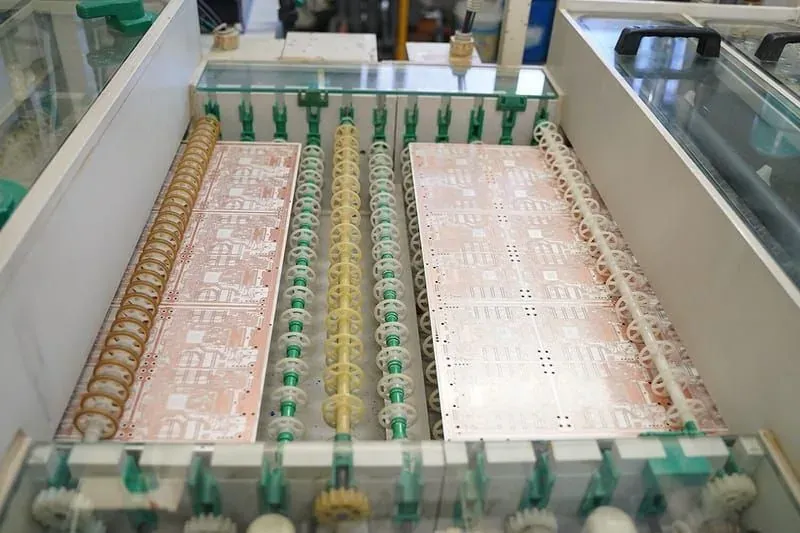
You have a unit price. You have a lead time. You are about to release the PO, and someone in the supplier's planning team asks how many panels they should start.
That question is the whole problem. You bought a quantity of boards. The factory runs a quantity of panels. Between those two numbers sits every process step that can destroy work already paid for — and in HDI, that list is longer than it is for a conventional multilayer board. Nobody is being evasive. The two sides are simply counting different things, and the gap between them has an owner only if the contract says so.
The quantity you finally receive is not decided by the number on your PO. It is decided by who absorbs scrap at each stage of the process chain, and by which revision of the documents that decision was written into.
This is not a yield article. You are not going to get a percentage out of your supplier, and you should not want one — a yield figure quoted before the first build is a guess dressed as data. What you can get, and what actually protects your schedule, is a clear answer to three questions: who decides the start quantity, what happens the day the count comes up short, and whether scrap discovered late costs the same as scrap discovered early.
Two quantities, one purchase order
Read a typical HDI quote closely and you will find it operates on an order quantity. Read the factory's internal work order and you will find it operates on panel starts. Translating between them involves at least four conversions:
- Boards per panel. Your board is stepped into an array on a production panel. The number that fits is a function of board outline, required spacing, tooling margin and panel size.
- Panels per start batch. Equipment and process windows have practical batch sizes; a start batch is rarely one panel.
- Process allowance. Some number of panels is started above the arithmetic requirement, because some will not finish.
- Acceptance screening. Panels that finish are not automatically panels that ship.
Only the first of those four is usually visible to you at quote time. The third one — the process allowance, commonly called over-build — is the one that determines whether you receive a full count, and it is almost never written down. It lives as a planning habit inside the supplier, calibrated to their own history with boards that resemble yours.
That habit works fine until your board does not resemble anything in their history. A new build class, a tighter line width, a first run at a higher microvia count: the habit is now an assumption about a board nobody has made yet. If the assumption is low, you get a short delivery. If it is high and the contract says you pay for starts, you pay for panels you never see.
What this means for your RFQ: ask which quantity the quoted price is attached to. "Price per board at the ordered quantity" and "price per board, quantity subject to process yield" are different commercial offers, and only one of them puts the count risk on the supplier.
Where scrap actually happens in an HDI process chain
The reason HDI needs its own conversation about scrap is structural, not statistical. A conventional multilayer board is laminated once. An HDI board with stacked build-up layers is laminated several times, and each lamination cycle brings its own drilling, its own plating and its own inspection step back into play.
Think of the chain in terms of accumulated value rather than process names:
Early stage — inner layer imaging and etch. A panel lost here has consumed laminate and one imaging pass. Replacing it means starting a new panel at the front of the queue. The material cost is real but modest; the schedule cost is a full cycle time.
Middle stage — each build-up cycle. Every added build-up layer is another lamination, another via formation step, another metallisation step, another registration-dependent operation. A panel lost in the third build-up cycle has absorbed everything that came before it. There is no partial recovery: the panel does not go back two steps, it goes back to the beginning.
Late stage — surface finish, electrical test, final inspection. A panel rejected here is the most expensive unit in the building. It carries the full process cost and, critically, the full lead time. Starting a replacement now means your delivery date moves by most of a build cycle, not by a few days.
Two consequences follow, and both belong in your contract rather than your spreadsheet.
First, scrap cost is not linear in the process chain, so a single blanket allowance negotiated at quote time cannot be fair to both parties across all failure modes. Losing panels early and losing panels late are different events with different remedies.
Second, late-stage loss converts a quantity problem into a schedule problem. This is the one that damages you. A shortfall discovered at final inspection does not just mean fewer boards; it means the replacement cannot be expedited past its own process time. If you have already committed a date downstream, you committed it against a count that had not been verified yet.
This is why the useful supplier question is structural: *at which stages of this build is loss most likely, and what is the recovery path from each?* A supplier who can answer that is describing their process. A supplier who answers with a single percentage is describing their sales position.
Over-build: three ways to write it, three different risk owners
Over-build is the extra material started so that the finished count meets the ordered count. The engineering question is how much. The commercial question is who decides and who pays — and there are three common structures.
Structure A — Supplier-owned allowance, firm delivered quantity
The supplier determines the start quantity. You are quoted and invoiced for the ordered quantity of good boards. Short delivery is the supplier's problem to fix.
- Risk sits with: the supplier.
- You should expect: a higher unit price, because the allowance is priced in.
- Watch for: the shortfall remedy. "Firm quantity" without a stated remedy is a promise with no consequence attached. If the remedy is only "we will build more," your schedule is still exposed.
- Best for: production reorders where your downstream commitment is firm and you cannot absorb a partial delivery.
Structure B — Buyer-approved allowance, pay for starts
You approve a start quantity above your requirement and pay for the material started. Whatever finishes good, you receive.
- Risk sits with: you.
- You should expect: a lower unit price and a quantity range rather than a number.
- Watch for: whether the agreed allowance was set from evidence about a comparable build or picked to make the quote look competitive. Also confirm what happens to the surplus if the run goes well — overs you paid for should be shipped or credited, not absorbed.
- Best for: first builds and prototypes, where the supplier genuinely cannot forecast the build and the price difference reflects that.
Structure C — Shared band with a defined trigger
An acceptable delivery band is agreed in advance; inside the band the delivery is accepted as complete, outside it a named remedy applies.
- Risk sits with: both, by explicit allocation.
- You should expect: a negotiation about the band's width rather than about yield.
- Watch for: the band must have a trigger and a remedy, not only a width. A band without a remedy is just a pre-agreed shortfall.
- Best for: repeat HDI programmes where both sides have history on the same build and the band can be set from something real.
The choice between these is not a technical decision and should not be delegated to engineering. It is a decision about whose schedule absorbs a bad batch. Make it before the PO, because after a shortfall occurs every structure sounds unreasonable to whoever it lands on.
Shortfall: decide the remedy before you need it
When the count comes up short, there are only three outcomes, and they have very different consequences for you.
Rebuild to full quantity. You get your boards; you get them late. The remedy to specify here is not the rebuild itself — that is obvious — but the *timing commitment on the rebuild* and whether the rebuild inherits priority or re-enters the normal queue. A rebuild at the back of the queue is a rebuild that misses two of your milestones instead of one.
Partial shipment with the balance to follow. Useful when your downstream build can start on fewer units. Specify whether partial shipment triggers a second set of freight, inspection and documentation charges, and whether the balance has its own committed date or an estimate.
Ship short and settle on actuals. The commercially simplest option and the one that most often surprises buyers. Confirm the threshold below which short shipment is *not* acceptable at any price, because at some point the balance stops being an accounting matter and becomes a failed delivery.
Write the trigger as a condition, not an intention. "Supplier will notify buyer of any projected shortfall at the earliest point of detection, with the affected process stage identified" is actionable. "Supplier will endeavour to meet quantities" is not.
The notification timing deserves particular attention in HDI. Because loss can occur in a late build-up cycle, the supplier often knows a shortfall is likely well before final inspection. That knowledge is worth days to you. A clause that requires notification at detection rather than at delivery converts their internal information into your planning time.
The RFQ lines that actually fix this
Everything above collapses into a short block of text. Put it in the RFQ, not in an email thread after the quote arrives.
- Quantity basis. State whether your quantity is good boards delivered or panels started, and ask the supplier to confirm the quoted price is attached to that basis.
- Allowance ownership. Name the structure — A, B or C above — and require the supplier to quote against it rather than their default.
- Stage-aware recovery. Require the supplier to identify, for this build, the process stages where loss would require a full restart, and the recovery lead time from each.
- Shortfall notification. Require notification at point of detection, naming the affected process stage, not at delivery.
- Shortfall remedy. Pre-agree which of the three outcomes applies, including the rebuild's queue priority and whether partial shipment carries repeat charges.
- Revision lock. State that the allowance and remedy are tied to a named document revision, so that a design change re-opens them rather than silently carrying them over.
- Reorder treatment. State whether the agreed allowance carries into reorders unchanged, or is re-set once the build has run once.
Item 6 is the one buyers skip and later regret. An allowance agreed against revision B of your stackup is an allowance agreed against a specific build difficulty. Release revision C with one more build-up layer, and the old allowance is now attached to a board that no longer exists — but it will keep being applied unless someone re-opens it. Tie the number to the revision and the problem solves itself.
How to ask a supplier about this without asking for a yield number
Suppliers will not hand over yield data, and the ones who do are usually quoting a best case. Ask about structure instead. These questions have verifiable answers:
- For this build, how many lamination cycles, and at which cycle does a loss require starting a new panel from the beginning?
- At which stage is loss typically detected — in-process or at final test? What is the recovery lead time from the latest detection point?
- Is the start quantity set by your planning team or by our approved allowance?
- If you project a shortfall at the third build-up cycle, at what point do we hear about it?
- Does your quoted price change if we move the allowance from your account to ours?
- On a reorder of this exact revision, does the allowance change?
The answers tell you two things. They tell you how the build actually runs, which is engineering information. And they tell you whether the supplier is willing to describe their own process in operational terms, which is procurement information. A supplier who answers the fourth question with a specific detection point is a supplier whose planning you can build a schedule on.
Where this intersects your other decisions: the build class and layer count you specify determine how many cycles exist to lose panels in, so quantity risk and build complexity are the same conversation — see the HDI build options on the HDI PCB page. Where a conventional stackup can meet the requirement, the process chain is shorter and this entire category of risk shrinks; compare against multilayer PCB construction. If the boards feed an assembly you are also buying, the shortfall remedy has to align with the assembly schedule rather than just the bare-board schedule — see PCB assembly. For what has to be fixed before a quantity commitment can mean anything, review the manufacturing capabilities overview, and send the locked revision through the quote route so the allowance and remedy attach to a specific document set.
FAQ
Is over-build the same thing as a yield allowance?
They describe the same material but answer different questions. Yield is a retrospective measurement of what finished good. Over-build is a forward decision about how much to start. You cannot negotiate yield, because it has not happened yet. You can negotiate over-build ownership, because it is a clause.
Why does HDI need a different quantity conversation than a standard multilayer board?
Because of sequential build-up. Each build-up cycle re-introduces lamination, via formation and metallisation, so there are more points at which a panel can be lost — and a panel lost in a later cycle has absorbed all the prior cycles. The exposure is structural to how the board is built, not a reflection of any particular supplier.
Should I ask my supplier for their HDI yield percentage?
Asking is reasonable; relying on the answer is not. A pre-build figure is a forecast, and a figure from a different board is not about your board. Ask instead at which stages loss requires a full restart and what the recovery lead time is from each. Those answers are checkable and they are what your schedule depends on.
If I pay for panel starts, do I own the surplus boards?
Only if the contract says so. This is the most common gap in Structure B. Specify that boards finishing good above your ordered quantity are either shipped or credited. Otherwise you have paid for material whose disposition is undefined.
Does the allowance carry over to a reorder automatically?
It should not, and you should state that explicitly. The first build generates real information about where this particular board loses panels. A reorder is the point to re-set the allowance using that information, in either direction. Carrying a first-build allowance into volume means pricing a risk that has since been measured.
What is the single most useful clause if I only add one?
Shortfall notification at point of detection with the process stage named. It costs the supplier nothing, and it converts information they already have into days you can use for replanning. Most shortfall damage is not the missing boards — it is finding out too late to react.
Need PCBs for Your Project?
Get an instant quote — prototypes from $2, delivered worldwide.
Get Instant Quote