EMC/EMI Components on a PCBA BOM: Declaring What the Assembler May Not Substitute
The substitution you will not hear about
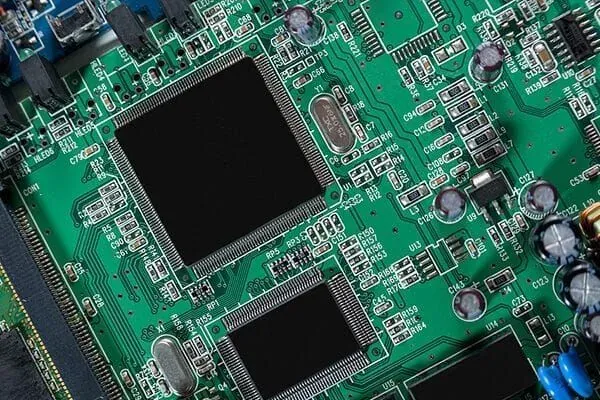
A turnkey assembler is handed a BOM with a few hundred lines. Somewhere in it sit a common-mode choke on the DC input, two ferrite beads on a clock line, a three-terminal filter at a connector, a handful of ESD protection parts, and a shielding can with its conductive gasket.
Procurement proceeds. Some lines are short, some have long lead times, some have a cheaper cross-reference sitting in the assembler's own approved list. The assembler does what it is paid to do: it keeps the line moving, and for each problem line it finds a part that matches what the BOM told it the part is. Same footprint. Same nominal value. Same package code. Functionally equivalent, by the only definition available to it.
You find out at EMC retest.
The uncomfortable part is that nobody acted badly. The assembler applied an equivalence rule to the data it was given, and the rule was satisfied. The gap is not a process failure at the assembler. It is a scope declaration that was never written, and this article is about writing it.
Why "important parts" is the wrong selection rule
The instinct is to mark the EMC-critical lines as critical and expect that to be enough. It is not, for two reasons.
First, "critical" is a statement about consequence, not about procedure. It tells the assembler that a mistake here would be expensive. It does not tell it what counts as a mistake, and a buyer-side adjective does not change the equivalence test the assembler will actually run.
Second, criticality maps poorly onto the real risk. Plenty of genuinely critical lines are perfectly safe to substitute, because everything that makes them equivalent is printed on the BOM line. A bulk electrolytic with stated capacitance, voltage rating, package and temperature class is largely self-describing. A 0.1% reference resistor is self-describing. These are high-consequence parts with low substitution risk.
The selection rule that actually works is narrower and mechanical:
> A line needs restricted-substitution status when the properties that decide equivalence cannot be read off the BOM line.
This is a question about information, not about importance. It can be answered line by line without any EMC judgement, which is exactly why it belongs in procurement rather than in a design review. Ask of each line: if someone matched the part number's value, package and footprint and nothing else, would they have matched the part? If yes, the line is open. If no, the line is restricted and the declaration owes the assembler whatever is missing.
What goes missing: the same four kinds of attribute, every time
Across the component families that tend to carry EMC behaviour, the properties that go unstated fall into a small number of recurring categories. Naming them is what lets you build the attribute columns in the next section.
Behaviour versus frequency, not a single number. A ferrite bead described by its impedance at one frequency is described almost not at all. Two parts with the same headline impedance can put their useful range in different places, and the one that matters is the one that covers the frequency where the problem is. The BOM line holds one number; the decision needs a curve.
Behaviour under load. Inductive parts stop behaving inductively above some bias level, and where that happens is a property of the part's construction. A substitution that preserves the nominal inductance while shifting that threshold has preserved the column and changed the component. Nothing in a value-plus-footprint match detects this.
Parasitic character. The reason a capacitor, a filter or a suppressor works at high frequency often has little to do with its primary value and much to do with its construction, internal geometry and termination style. Two parts that are interchangeable as capacitors need not be interchangeable as filter elements.
Geometry and contact, as electrical properties. For shielding hardware, gaskets, grounding clips and anything whose job is to make a connection to a reference plane, the mechanical specification *is* the electrical specification. Compression behaviour, plating, contact area and continuity around the perimeter determine whether the part does its job. These are the lines most likely to be treated as hardware and least likely to be treated as electrically restricted.
Notice what is common to all four. Each is a property of the physical part, derivable from a datasheet or a sample, invisible in a parts database row. That is why restricted-substitution scope has to travel with the BOM as additional data, not as an instruction.
The scope declaration: four tiers, not a binary
A flat "do not substitute" list fails in practice. It is either so short that it misses lines, or so long that it stalls procurement and gets quietly worked around on the lines where it hurts. Four tiers keep the restriction proportional to what is actually at stake.
Tier 1 — Fixed, no alternate. The part is named and nothing else may be fitted. Reserved for lines where equivalence cannot be argued on paper at all, typically because behaviour depends on construction in a way no specification captures. The cost is real: a shortage on a Tier 1 line stops the build and escalates to you. Keeping this tier small is what makes it enforceable.
Tier 2 — Substitution on buyer approval. Alternates are allowed, but only after the buyer-side approver accepts a specific proposed part. The assembler may source and prepare, and must not fit, until approval lands. This is the tier most EMC-relevant actives and magnetics belong in.
Tier 3 — Substitution against declared attributes. The declaration states the attributes that must be matched, and the assembler may substitute autonomously when a candidate meets all of them, with notification. This tier only works if the attribute set is genuinely sufficient; if you cannot write the attributes, the line belongs in Tier 2 rather than here. Done properly, Tier 3 absorbs most of the shortage pressure without routing every event through you.
Tier 4 — Open. Standard equivalence rules apply, no notification needed. Most of the BOM should land here, and saying so explicitly is useful: it signals that the restricted tiers are deliberate rather than blanket caution, which is what makes the assembler treat them as real.
The practical test of whether your tiering is sound is not how safe it looks. It is whether a shortage on a Tier 3 line can be resolved without a phone call, and whether a shortage on a Tier 1 line will actually reach you instead of being solved locally.
The attribute columns
Tiers tell the assembler what authority it has. Attributes give it the ability to exercise that authority correctly. For every Tier 2 and Tier 3 line, the declaration should carry:
- The functional role, in one phrase. Not the part type, the job: common-mode suppression on the input, transient protection at the connector, enclosure bonding. Role tells a reviewer what to compare, and lets a competent assembler recognise a bad candidate before proposing it.
- The frequency region that matters. Expressed as a region, not a point. This single column eliminates most of the wrong-shape substitutions, because it tells the reviewer where to look on a candidate's curve.
- The operating condition the part must survive while still behaving. Bias, current, thermal environment — whatever determines the threshold discussed above. Stated as a condition to be satisfied, not as the limit of the specified part.
- The attributes that must be matched, and those that may vary. Being explicit about what may vary is as valuable as the restriction. It is what lets the assembler find a candidate instead of giving up and escalating.
- Mechanical and contact requirements, for anything whose electrical function depends on geometry or contact.
- Evidence required with a proposal. Datasheet section, curve, sample, or test. State this up front or you will spend a week asking for it under schedule pressure.
- Named approver and response window. Covered next.
Two notes on form. Keep this as columns attached to the BOM, not as prose in a separate specification document — prose gets read once at quote stage and never consulted at the moment a buyer is deciding what to order. And keep the declaration in the same file the assembler's purchasing team actually works from, for the same reason. On how a specification earns binding force at all, see the companion piece on how a fabrication specification sheet becomes binding on a quote; the same principle applies here, which is that an instruction living in a document nobody opens at the decision point is not an instruction.
Who holds the veto, and how long they have
A restricted-substitution scope with no named approver and no response window converts into an open scope under schedule pressure. This happens without anyone deciding it: a line goes short, the proposal sits unanswered, the build date approaches, and somebody makes a reasonable local decision.
Three things to declare:
Who approves. A role, reachable, with the authority to say no. If EMC responsibility sits with a compliance function or an external test house, state how that function is reached and whether its sign-off is required or advisory. Routing approvals through a general project mailbox is the most common way this control is lost.
How long the approver has. A stated window turns silence into a tracked exception instead of an implicit yes. The window should be short enough to be credible against the assembler's own ordering rhythm — an approval window longer than the procurement lead time is decorative.
What happens on expiry. This is the clause most often omitted and the one that does the work. The default on no response must be explicit: hold the line and let the schedule slip, or proceed with notification. Either answer is defensible. No answer means the assembler will choose, and it will choose the one that protects the schedule.
Where a substitution is driven by end-of-life or a lead-time collapse rather than ordinary sourcing, the clock structure is a separate problem with its own deadlines; that is covered in component EOL and substitute approval timing. The scope declaration here defines *what* needs approval; that piece covers *how fast* the answer has to arrive once a part disappears.
Where the cost lands when the scope is missing
Worth being concrete about this, because the scope declaration looks like paperwork until you can see the alternative.
An unapproved substitution on an EMC-relevant line is typically invisible through every normal checkpoint. It passes incoming inspection, because the part matches the paperwork the assembler was working from. It passes electrical test and functional test, because the board works — EMC behaviour is not what those tests look at. It passes visual inspection, because it looks right.
It surfaces at compliance testing, which sits near the end of the schedule, often outside your building, often with a booked slot. At that point the board is built, the parts are bought, the stock is committed, and the change you need touches a part that may itself be on allocation. The technical fix is usually small. The schedule and commitment around it are not, and the question of who pays becomes contested precisely because the assembler followed a defensible rule.
The asymmetry is the whole argument. Writing the scope costs an afternoon with the BOM and the designer. Discovering it was missing costs a retest slot, a rework pass on built boards, and a negotiation. On how that negotiation tends to go once a test has already failed, see EMI shielding compliance change cost ownership — this article exists to keep you out of it.
Putting it on the RFQ
Three placements, because a declaration that arrives late is a declaration that arrives after the quote assumptions are set.
At RFQ. Include the tier column and attribute columns with the BOM you send out. This does two things: it tells quoting suppliers that some lines carry sourcing constraints that may affect price and lead time, and it lets you read their response. A supplier that acknowledges the tiers and asks about the approval window has understood the request. One that returns a quote with no reference to it has priced the BOM as if every line were open.
At order. Restate the tiers, the named approver and the response window in the order or its attachments. Quote-stage attachments do not reliably reach the purchasing team that will be ordering parts weeks later.
At each substitution event. Require the proposal to cite the line's tier and the attributes it claims to match. This is what converts the declaration from a document into a working control, and it surfaces tiering errors early — a line generating constant Tier 2 traffic probably has a writable attribute set and belongs in Tier 3.
The choice of engagement model changes who buys the parts but not who owns this declaration; see turnkey versus consigned PCBA. Under consignment you are doing the substituting, which means the scope exists for your own purchasing team. Under turnkey the assembler substitutes, and the scope is the only thing standing between its equivalence rule and your compliance result. For the related question of what the assembler is contracted to verify after the boards are built, see PCBA test and inspection requirement definition.
If you want these columns reviewed against a specific BOM before you send it out, our PCB assembly page covers what we need to see, and the quote form takes a BOM with its tier annotations attached. Assembly capabilities outlines the scope we work within, and contact reaches the engineering side directly if you would rather talk through the tiering first.
FAQ
Is this not just an approved vendor list?
An AVL names acceptable sources. It does not state which lines may be substituted, by whom, against what attributes, or within what window. The two are complementary: an AVL constrains *where* a part comes from, a substitution scope constrains *whether a different part may be fitted at all*.
How many lines should end up restricted?
Fewer than instinct suggests. The selection rule — can equivalence be read off the BOM line — usually produces a short list, and a short list is what gets honoured. If your restricted set runs to dozens of lines, re-apply the test; some of those lines are probably self-describing and belong in Tier 4.
Can the assembler not just ask every time?
It can, and good ones do for anything that looks unusual. But asking is a judgement call about whether a line looks EMC-relevant, and most of the lines in question do not look unusual. A ferrite bead looks like a passive. The declaration removes the need for the assembler to guess which passives are special.
What if we do not know the frequency region that matters?
Then that is the finding, and it belongs with the designer rather than in the BOM. A part whose required behaviour nobody can state is a part whose equivalence nobody can judge, which puts the line in Tier 1 or Tier 2 by default until someone can state it.
Does declaring the scope slow procurement down?
Properly tiered, it speeds it up. Tier 3 with sufficient attributes lets the assembler resolve shortages without waiting on you — which is faster than the undeclared case, where a cautious assembler escalates everything and a confident one escalates nothing.
We are consigning the parts ourselves. Do we still need this?
Yes, aimed inward. Your own buyers face the same shortages and apply the same value-plus-footprint equivalence rule. The declaration is what tells them which lines they may not resolve on their own authority.
Related links
Need PCBs for Your Project?
Get an instant quote — prototypes from $2, delivered worldwide.
Get Instant Quote