PCB Assembly & Contract Manufacturing: Component EOL and the Substitute Approval Clock | PCB168
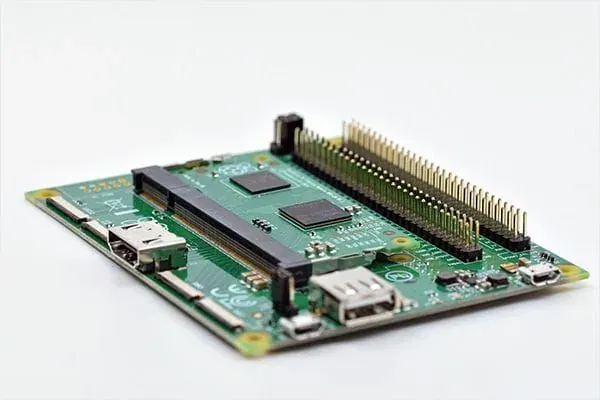
The shortage is not the event. The countdown is.
A turnkey PCBA order is running. Material is being kitted. Then one of two notices arrives: a manufacturer issues a discontinuation notice on a part in your BOM, or your contract manufacturer reports that a part that quoted at a normal lead time now quotes at something measured in quarters rather than weeks.
Nothing has broken yet. No board is scrapped, no line has stopped, no delivery date has formally slipped. What has actually happened is that a countdown started, and the first thing worth noticing is that nobody in the contract was told how long it runs.
Two clocks now run side by side at different speeds.
The supplier's clock is physical. Kitting has a date on which the remaining parts must be complete or the job cannot be released to the line. The line itself has a slot, and that slot was allocated against a schedule that other jobs are also pulling on. Whatever distributor stock still exists for the original part is being consumed by the rest of the market in real time, and it is not reserved for you.
The buyer's clock is procedural. An engineer has to look at the proposed substitute. Someone has to decide whether the change touches anything that was promised to an end customer or declared to a certification body. Somebody has to sign. In most purchase orders, not one step of that sequence has a stated duration.
The loss does not arrive as "one day late." It arrives as a missed kitting date, which releases your line slot to another job, which pushes you to the next available window — by which time the original part's remaining stock has been bought by somebody who answered faster. One part, one unanswered email, and the whole build is resequenced.
This article is about the second clock. It does not tell you how to evaluate a substitute part; our turnkey PCBA BOM risk and alternate part approval guide covers what to compare and how to rank risk. The question here is narrower and almost always unwritten: once a proposal lands in your inbox, how long do you have, and what happens if you say nothing?
Four clauses, and why the first three are worthless without the fourth
Everything below reduces to four clause families:
- Declaration authority — who is entitled to say "this part now requires substitution," and on what basis.
- Proposal completeness — what a substitute proposal must contain before it counts as submitted.
- Response window — how long the buyer has to return a written decision once a complete proposal is submitted.
- Default path on expiry — what happens automatically if the window closes with no decision.
Most purchase orders contain a weak version of the first and nothing else. Some mature quality agreements contain the first three. The fourth is the one that is nearly always missing, and without it the other three are decorative: a window with no consequence for breaching it is not a window, it is a suggestion.
Write all four or the clause does no work.
Clause 1: Who is allowed to declare that substitution is required
"The part is unavailable" is not one statement. It is at least four, and they carry different levels of obligation.
Manufacturer end-of-life notice. The component manufacturer has published a discontinuation or last-time-buy notice through its formal change-notification process. This is documentary, verifiable, and not a matter of opinion. It should be the strongest trigger in your contract, and the clause should require the notice itself to be attached — not summarised.
Allocation or lead-time extension. The part still exists but the quoted lead time has moved beyond the build window. This is a real condition, but it is also the one most open to interpretation, because "beyond the window" depends on a window that your PO may never have defined. If you want this to be a valid trigger, the contract has to say what the build window is measured against — the acknowledged delivery date, the kitting date, or the line slot.
Market shortage without a formal notice. The part is not discontinued and has no official extension; it is simply hard to buy right now at an acceptable price or from an acceptable source. This is the weakest trigger and the one most likely to be contested later, because the underlying claim is commercial rather than technical.
Franchised-source unavailability. The part is obtainable, but not from a source that satisfies your sourcing rules. Whether this counts as "requires substitution" or as "requires a sourcing exception" is a decision your contract should make in advance, because the two paths have different approvers and different risk owners.
Two things belong in the clause. First, the trigger types you accept, named explicitly, each with the evidence that must accompany it. Second, who may raise each one: the contract manufacturer's material team, your own sourcing function, or either. If the supplier can declare a trigger unilaterally and the trigger starts a clock whose expiry has consequences, then you have handed over a mechanism, and the completeness requirements in the next clause are what keep it honest.
One sentence prevents a predictable argument: the contract should state that a substitution trigger is not by itself an approval, a price change, or a schedule relief. It starts a process and nothing more.
Clause 2: What makes a proposal complete enough to start the clock
This is the clause that protects the buyer, and it is the one buyers most often forget to ask for.
If the response window begins the moment the supplier sends any email containing the word "substitute," then the supplier controls your deadline and can compress it to nothing by sending something unusable. The fix is structural: the clock starts only when a proposal meeting a defined completeness standard is received, and an incomplete submission does not start it.
So the contract has to define completeness. What belongs on that list is specific to your product, but the categories are stable:
- Unambiguous identification of both parts — the original and the proposed replacement, each identified the way your BOM identifies parts, not by informal shorthand.
- The trigger and its evidence — which of the Clause 1 trigger types applies, with the manufacturer notice or the quoted lead-time confirmation attached.
- A technical comparison, in the form your engineering team can act on. The content of that comparison is the subject of the companion guide referenced above; what matters here is that the comparison arrives with the proposal rather than after the buyer asks for it.
- Declared differences, including the ones the supplier considers harmless. A proposal that reports only equivalence is less useful than one that names what changed. Footprint, package, polarity marking, thermal characteristics, packaging format and moisture handling class are all things that can be "equivalent" on a datasheet and still require action on a line or in a document.
- Downstream document impact — whether the change requires a BOM revision, a CPL change, a stencil or programme change, a first-article submission, or an update to anything previously declared to a customer or certification body.
- Commercial consequence — price direction, minimum order quantity, and whether the quantity on offer covers this build, several builds, or the remaining product life.
- The expiry attached to the proposal — the date beyond which the offered material or price is no longer held. This single line converts the clock from an abstraction into something with a real end.
Note that a complete proposal and a *good* proposal are different things. Completeness is a gate on the clock, not a verdict on the substitute. A proposal can be fully complete and correctly rejected.
Two practical additions. First, require proposals in a consistent, machine-readable form where you can; the industry convention for material declaration exchange (IPC-1752A and the related IPC-1751A supplier declaration framework) exists precisely so this kind of data stops arriving as prose in a mail body. Second, require a single submission channel and a single acknowledgement. If proposals can arrive via three engineers' inboxes, nobody will ever agree on when the clock started, and the dispute will be about timestamps rather than parts.
Clause 3: The response window, and who actually has to move inside it
Now the part buyers resist: committing to a deadline on your own side.
The resistance is understandable. Engineering capacity is finite, the person who understands the circuit may be travelling, and approving a substitute on a safety-relevant or certified product is not a task anyone wants to rush. But refusing to state a window does not create more time. It transfers the deadline to a place where it is enforced by physics instead of by agreement: the kitting date decides, and nobody negotiated with the kitting date.
A workable window clause has four components, and none of them is a number you should take from an article.
What the window is measured in. Working days, not calendar days, and the contract should say whose working calendar governs. Cross-border builds between parties with different public holidays produce silent multi-day losses here, every time.
Where it starts. At acknowledged receipt of a complete proposal, per Clause 2 — not at the supplier's send time, and not at the moment the shortage was first mentioned in a call.
Tiers by consequence, not one window for everything. A single window for all changes either strangles the simple cases or gives dangerous latitude to the serious ones. The useful split is by what the change touches:
- Changes with no document impact beyond the BOM line itself — the shortest window, because the decision is genuinely small.
- Changes that alter footprint, package, assembly handling or any downstream production document — a longer window, because other parties have to be told and other documents have to move.
- Changes affecting anything declared to an end customer, a regulator or a certification body — the longest window, because the buyer's own answer depends on a third party's answer.
The tiering rule matters more than the lengths. A contract that assigns the right tier will survive a dispute even if the individual windows were estimated generously.
Who is on the hook. Name the buyer-side role that owns the written response, and name a backup. "The buyer will respond" is not an obligation anybody holds. A clause that names a role and an alternate is the difference between a window that works during holiday season and one that does not.
Two provisions worth adding while you are here. First, a clarification stop-clock: if the buyer raises a defined, substantive question, the clock pauses until the supplier answers, and the remaining time resumes. Without this, a buyer who asks a reasonable question burns their own deadline waiting for the reply. Second, a reciprocal duty on the supplier to re-notify if the proposal's own expiry falls inside the response window, because a window that outlives the offer it concerns is not a window at all.
Clause 4: The default path when the window closes with nothing in it
This is the clause that makes the other three real, and the one almost no purchase order contains.
Right now, if your approval window closes in silence, what happens? In most contracts the honest answer is: the contract manufacturer improvises. Possibly they wait, and the schedule quietly slips. Possibly they build what they can and leave the rest, which creates a partial build nobody planned. Possibly — and this is the one that produces the serious disputes — somebody takes silence as consent and buys the substitute.
Pick one of these in advance and write it down. The realistic options:
Hold and wait for the original part. The build waits for the original part to become available. Honest, and sometimes correct, but it has to come with the admission of what it costs: schedule, and whatever the material-ownership terms say about who carries the consequence. The ownership question itself is settled elsewhere — see who owns the material when parts run short — and it is deliberately not re-decided here. This clause only decides the *action* on expiry; the ownership clause decides who pays for it.
Partial build and deferred completion. Assemble everything the missing part does not block, and complete later. This needs its own detail: whether partially built assemblies are stored or shipped, who holds them, and what documentation accompanies a partially completed lot. Without that detail "partial build" is a phrase, not an instruction.
Suspend the order and re-baseline. The job stops, comes out of the schedule, and re-enters against a new quotation and a new date. Blunt, but it has one real advantage: it is unambiguous, and it puts the cost of indecision somewhere visible instead of letting it accumulate silently.
Escalate and compress. Expiry triggers notification to a named role one level up, with a short secondary window. Appropriate where silence usually means the right person never saw the proposal — which, in practice, is most of the time.
Deemed approval. Silence equals consent. Occasionally defensible for the lowest consequence tier with a pre-agreed equivalence standard. Never write this for a change that touches a customer declaration, a certification, or a safety function. If you adopt it at all, adopt it per tier, never as the blanket default.
The choice can differ by tier, and arguably should: escalation for the serious changes, a pre-agreed action for the trivial ones. What must not happen is the current situation in most contracts, which is that the default path is decided after the fact by whoever is under the most pressure.
The cost of a late decision, and where it lands
Worth stating plainly, because this is what turns the clause from paperwork into something your finance function cares about.
A late approval does not cost you the delay. It costs you the option you had while the clock was still running. Distributor stock that existed on day one is gone by day twenty, bought by a buyer with a shorter window. The line slot you held was reassigned. The substitute that was available in build quantity is now available in sample quantity. In each case the decision you eventually make is worse than the one you could have made, and the gap is the real cost.
Where that cost lands is a separate contractual question, and the honest answer is that it lands wherever your material ownership and schedule terms already put it. If those terms are silent, it lands on whoever has less leverage on the next order. That is not a rule, it is just what happens.
One more thing that catches buyers who do move fast: available stock is not the same as usable stock. Material that has been sitting somewhere, in packaging whose condition nobody recorded, can require handling steps before it can be placed — moisture-sensitive parts being the obvious case, and one with its own terms, covered in moisture-sensitive device handling declarations. The industry handling convention here (J-STD-033) exists for this reason. A substitute approved on Friday is not necessarily a substitute on the line on Monday, and the proposal completeness list in Clause 2 should force that fact to surface before you approve rather than after.
Where to put these clauses so they are actually enforceable
Four clauses, three documents, and the placement matters.
In the RFQ, before any price exists. Ask prospective suppliers how they handle an EOL event: who declares it, what their proposal contains, what response time they expect from you, and what they do on expiry. You are not negotiating yet — you are finding out whether the supplier has a process or improvises. The answers also belong in your quote comparison, because a supplier who holds material and escalates is offering something different from one who stops the job, and that difference never appears as a line item. Our note on aligning quote scope boundaries treats this as one of the scope lines buyers forget to normalise.
In the quality agreement, as the standing process. Declaration authority, completeness standard, window tiers, stop-clock and default paths live here. This is the document that survives across orders, which is the point: the clause should not have to be renegotiated every time a part goes obsolete.
In the purchase order, as the order-specific parameters. The build window this order is measured against, the kitting date, the named approver and alternate for this programme, and any tier override for this product. These are the values that change order to order; the mechanism should not.
A practical note on repeat orders. The approval you gave three months ago applies to the part, the revision, and the quantity it was given for — not to every future build. If a substitute is to become the standing part, that is a BOM revision with its own change control, and it should trigger whatever first-article or verification step your agreement attaches to a material change; see first-article inspection report release terms for the hook that step hangs on. The common failure is an approval granted as a one-time exception that quietly becomes permanent because nobody revised the BOM, and then nobody can say which revision the last three builds were made against.
What these clauses deliberately do not do
Stating the limits, because clauses oversold are clauses ignored.
They do not make a substitute acceptable. A fast decision on a bad part is still a bad part. These terms govern timing and authority, not technical merit.
They do not prevent obsolescence. Component lifecycles are set by their manufacturers; obsolescence management as a discipline (the framework in IEC 62402 and the manufacturers' own change-notification practice) is about anticipation, and it operates upstream of everything here. These clauses govern what happens once the notice lands.
They do not assign cost. Who pays for the price delta, the idle line or the expedite is decided by the material ownership and schedule terms, not by the approval clause. Keep them separate; merging them produces a clause that is argued about in both directions at once.
They do not remove the need for judgement. The tiering rule tells you which window applies. It does not tell you whether to accept the part.
What to settle before the PO
A short list you can take into a supplier conversation:
- Which trigger types you accept as "requires substitution," and what evidence must accompany each.
- Who, by role, may raise each trigger.
- What a substitute proposal must contain to be considered submitted — and the explicit statement that an incomplete proposal does not start the clock.
- Where the clock starts, whose working calendar governs it, and how receipt is acknowledged.
- Your window tiers, defined by what the change touches rather than by part value.
- The named approver and the named alternate on your side.
- Whether a clarification question pauses the clock.
- The default path on expiry, per tier — and if any tier uses deemed approval, the explicit exclusion of customer-declared, certified and safety-relevant changes.
- Whether an approval is one-time or becomes a BOM revision, and what verification step a revision triggers.
None of these requires a number from us. Every one of them requires a number or a name from you, agreed with your supplier, written in the document that outlives the order.
FAQ
Is an EOL notice the same as a lead-time extension?
No, and the contract should not treat them as one trigger. An end-of-life notice is a documented, verifiable statement from the component manufacturer that the part is going away; the evidence exists and can be attached. A lead-time extension is a current condition that may reverse, and whether it qualifies as a trigger depends on a build window your PO has to define. Giving both the same evidential weight means the weaker one gets used to start clocks it should not start.
Can our contract manufacturer substitute a part without our approval?
Only if your agreement permits it, which is exactly why the default-path clause matters. If the agreement is silent on what happens when your approval window expires, you have not prohibited unilateral substitution — you have left it undefined, and undefined gets resolved by whoever is under schedule pressure. If you want approval to be mandatory in all cases, say so, and then accept the consequence that silence means the build waits.
What if we cannot answer inside the window because our own customer has to approve?
That is a tier, not an exception. Changes whose approval depends on a third party belong in the longest window, and the clause should acknowledge that your answer is gated externally. Some agreements add a provision for a buyer-requested extension, granted once, in writing, with the supplier stating what the extension costs in material availability. What does not work is a single window that pretends every decision is internal.
Does the supplier have to prove the original part is unavailable?
That is what the evidence requirement in the completeness standard is for. For a manufacturer discontinuation, the notice itself should be attached. For a lead-time extension, a quoted confirmation against the part as identified in your BOM. Without an evidence requirement, "unavailable" is an assertion, and an assertion that starts a clock with consequences is a mechanism you do not control.
Our approvals always run late. Should we just use deemed approval?
Not as a blanket rule, and not as a substitute for fixing the cause. Deemed approval on the lowest tier, with a pre-agreed equivalence standard, can be reasonable. Applied across the board it converts an internal process weakness into a contractual authorisation for changes you never reviewed — including, eventually, one that touches something you declared to a customer. Escalation on expiry addresses the common root cause, which is that the proposal never reached the person who could decide.
If we approve a substitute once, is it approved for future builds?
Only if you say so. An approval given for one build, one revision and one quantity applies to that scope. Making a substitute the standing part is a BOM revision under change control, with whatever verification step your agreement attaches to a material change. The common failure mode is drift: a one-time exception repeats until nobody can state which revision the recent builds were built to.
Where should these clauses live — the PO or the quality agreement?
Both, split by what changes. The mechanism — authority, completeness, tiers, stop-clock, default paths — goes in the quality agreement so it does not need renegotiating per order. The parameters — this order's build window, kitting date, named approver and alternate, any tier override — go in the PO. Mechanism in the standing document, values in the order document.
Does this apply to consignment and partial-turnkey orders too?
The timing mechanism applies regardless of supply model, because the kitting date exists in all of them. What changes is who is obliged to raise the trigger and who holds the proposal duty: on a consigned line, the shortage may be visible to you first and the proposal may be yours to make. Define the direction of the obligation per supply model, then apply the same four clauses in whichever direction it runs.
Related links
- PCB Assembly
- Request a Quote
- Capabilities
- Turnkey PCBA BOM risk and alternate part approval
- PCB assembly contract manufacturing: who owns the material when parts run short
- PCBA quote comparison: aligning scope boundaries
- PCBA moisture-sensitive device handling PO declarations
- PCBA first-article inspection report release terms
Need PCBs for Your Project?
Get an instant quote — prototypes from $2, delivered worldwide.
Get Instant Quote