HDI PCB for Automotive Electronics: Qualification Documents to Request at RFQ Stage
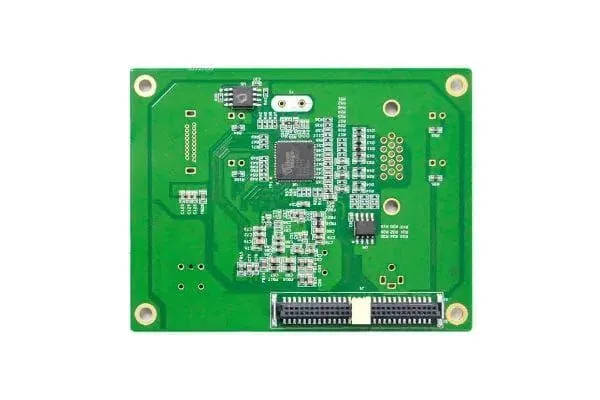
"Automotive" is being used as an adjective, and both sides know it
Send an RFQ that says "automotive-grade HDI, 8 layers, 1+N+1" and you will get a quote back. That is the problem. The word automotive in that sentence did no work: it did not tell the fabricator which approval flow your programme runs, which documents your own customer will ask you to produce, or whether anything about the order differs from a commercial board with the same geometry.
Both parties usually let it pass. You wrote automotive because the end product is a vehicle. The supplier read it as "reliability matters, be careful", quoted the geometry, and moved on. Nothing dishonest happened and nothing was agreed either. The gap surfaces later, at the point where someone upstream asks for a part submission package and you discover the documents were never in scope.
The fix is not to write automotive more emphatically. It is to ask for specific documents at RFQ stage and read what each one actually certifies. Four classes cover it, and they are not interchangeable.
The four document classes, and the boundary of each
| Class | Typical documents | What it proves | What it does not prove |
|---|---|---|---|
| Management system | ISO 9001 certificate with scope page, ISO 14001, automotive system certification if held | A documented quality system is maintained and audited by a third party, for the scope printed on the certificate | That any specific product was approved; that the automotive-sector requirements your customer cites are implemented |
| Product approval | Part submission packages, dimensional and material results, process flow, control plan, capability studies for declared characteristics | That a specific part number, on a specific process route, was approved against stated criteria | Nothing about a different part number, a different layer count, or a revised stackup |
| Process control | Control plan extract, process flow diagram, change notification procedure, sub-tier and outsourced-process control, traceability method and retention period | How the process is held between orders, and what happens when something changes | That the current lot was made to it — that needs lot records |
| Material and substance | Base material and prepreg declarations with Tg/Td and supplier grade, RoHS/REACH statements, IMDS or substance data entry, surface finish declaration | What is in the board and what can be declared downstream | Any performance conclusion; a material declaration is not a reliability result |
Read the table as a set of boundaries rather than a checklist. Most disputes about automotive PCB supply come from treating a document in one column as evidence for the column to its right.
Two boundaries matter more than the rest.
A management system certificate is scoped. The scope line on the certificate says which site and which activities it covers. A certificate covering "manufacture of printed circuit boards" at one address says nothing about a second site, and nothing about assembly if assembly happens elsewhere. Always ask for the page with the scope and the address, not a logo on a capabilities deck.
A product approval is part-specific. This is the one buyers most often over-read. An approved part number tells you that one construction passed one set of criteria on one route. Change the layer count, move a microvia from staggered to stacked, switch base material grade, or increase copper weight, and you are outside it. The approval did not become invalid — it simply never covered the new build.
What PCB168 publishes, and what you still have to request
Being concrete about the split is more useful than a generic list, so here is the state of it for this site.
Published and quotable today. The HDI PCB page states 4-20 layers, 2mil/2mil minimum line width and space, 0.075mm laser drilling, ±25µm layer registration, 1+N+1 to 4+N+4 stackups and FR-4/BT/ABF materials, and lists automotive electronics among its applications. The capabilities page goes further on the inspection side: AOI on every layer, 100% electrical test by flying probe or fixture, TDR coupon verification, microsection, X-ray for BGA and hole fill, and ionic contamination testing per IPC. It also publishes material families including FR-4 Tg135/150/170/180, high-CTI material above 600V, halogen-free availability and ceramic options, plus impedance control to ±5% TDR-verified. For current-carrying work the heavy copper page publishes 3oz to 20oz on 1-16 layers with a 6mil minimum line width. The site footer lists ISO 9001, ISO 14001, UL Certified and RoHS.
Not published, therefore to be requested and confirmed in writing. Whether automotive-sector system certification is held, and for which site and scope. Whether part submission packages of the type your programme needs can be produced, and in which format. Control plan and process flow extracts for your construction. Change notification terms, including notice period and what counts as a notifiable change. Traceability method and record retention period. Substance data entry in the system your customer uses. Any document number, certificate file reference or validity date.
The distinction is not a formality. A published capability tells you the process exists. A requested document tells you the process is governed and evidenced for your part. Nothing on a public page — this one included — should be read as the second.
Automotive inputs specific to the HDI side
HDI is where automotive programmes most often run past the boundary of an existing approval without noticing, because the geometry changes are small and the documents are silent about them.
Declare the via structure, not just the build notation. 1+N+1 and 4+N+4 describe how many build-up layers sit on each side, not whether microvias are stacked or staggered, nor whether they are filled and capped. The capabilities page publishes via-in-pad filled and capped and blind/buried vias as available, which is a capability statement. Which one your part uses is a construction decision that belongs in the specification, because it changes both the process route and what a cross-section has to show. PCB168 covers the declaration mechanics in stacked versus staggered microvia declaration.
Fix the base material grade, not the family. FR-4/BT/ABF is a family list. An automotive thermal profile interacts with Tg and Td, and a substitution inside the same family is a different material with different behaviour. Ask for the grade and the supplier, and ask whether substitution requires your approval. The reasoning behind the choice is in HDI base material declaration for RFQ.
Ask which structural evidence comes with each lot. Microsection and X-ray are listed as available inspection methods. For an automotive part the useful question is narrower: on which lots, against which acceptance criteria, and does the record come with the shipment or only on request. Availability and routine inclusion are different commitments.
Keep registration in context. ±25µm layer registration is published for HDI builds. It is a process capability figure, not a per-lot measured result for your panel. If your programme needs measured registration data, that is a record to request, not an inference to draw.
Automotive inputs specific to the heavy copper side
Heavy copper turns up in automotive work for power distribution, motor control and battery-adjacent hardware, and it brings a different document set because the failure conversation is thermal and mechanical rather than interconnect density.
Declare copper weight with its measurement basis and its layer positions. Heavy copper is published at 3oz to 20oz, and the number alone is ambiguous: base copper before processing and finished copper on the delivered board are different quantities. For an automotive part this becomes an acceptance criterion, so it needs a basis and a method. The single-field mechanics are in finished copper thickness versus base copper on the PO.
Treat the 6mil minimum line width as a constraint on the whole board. The heavy copper page publishes 6mil minimum line width, against 2mil/2mil on standard builds. On a mixed board where control signals share space with high-current pours, that limit shapes routing density, and the automotive question is whether your design leaves margin or consumes all of it. Design margin is not a document, but it determines how much of your quote is exposed to yield.
Ask what the thermal claim is based on. If a temperature rise or current rating appears anywhere in the exchange, ask whether it came from calculation, from a coupon, or from a measurement on a board like yours. All three are legitimate. Only one of them is a test result, and mixing them up is how an unsupported number ends up in a customer-facing document. Evidence requests for this class of board are covered in heavy copper supplier process evidence requests.
Declare the operating environment in the RFQ rather than in conversation. Ambient range, expected load profile and whether the board is conformally coated or potted change what matters in the build. Industrial heavy copper operating environment inputs sets out the fields; automotive programmes typically need them tighter and in writing.
A four-paragraph request email
Long document requests get partial answers because they are hard to route internally. Four short paragraphs, each naming a class, tend to come back complete.
> Subject: Automotive programme — document request with RFQ [part number / project]
>
> 1. System. Please send your ISO 9001 certificate including the scope and site address page, and confirm whether any automotive-sector system certification is held. If it is, please state the certificate holder, site and scope. If it is not, please say so directly — we need to know before we set our own requirements, not after.
>
> 2. Product approval. Our programme requires a part submission package at [level / format] for the part number above. Please confirm whether you can produce this, what it would contain, and the lead time. If you have supplied comparable documentation for a construction similar to ours, please describe the construction rather than naming the customer.
>
> 3. Process control. For our construction, please send a control plan extract and process flow diagram covering the characteristics we have declared, your change notification procedure with notice period and definition of a notifiable change, how outsourced processes are controlled, and your traceability method with record retention period.
>
> 4. Material and substance. Please confirm base material and prepreg grade and supplier with Tg and Td, the surface finish, RoHS and REACH statements, and whether substance data can be entered in [system your customer uses]. Please also confirm whether material substitution within the same family requires our written approval.
>
> Our declared characteristics and acceptance criteria are attached. Where a document does not exist, please state that rather than sending an adjacent one.
The last line does most of the work. It gives the supplier a permitted answer that is not a document, which is what makes an honest gap visible at RFQ stage instead of at part submission.
When the answer is "no": three reasonable explanations and one warning sign
Not every missing document is a problem. Read the shape of the answer.
Reasonable: the system certification is held by a different legal entity or site. Groups certify per site. Ask which site will build your part and whether that site is in the scope. This is answerable in one sentence, and a clear answer is a good sign.
Reasonable: part submission packages are produced on request rather than as standard. Many fabricators can assemble the documentation but do not carry it as a catalogue item, because most orders do not need it. Ask for scope, format and lead time, and price it as work.
Reasonable: some characteristics are recorded but not capability-studied. A capability study needs data volume. On a first build there may not be any. Saying so is more credible than producing a study with no population behind it.
Warning sign: the answer upgrades a document class instead of answering. If you ask for a control plan and receive an ISO 9001 certificate, or ask whether automotive system certification is held and receive "we serve automotive customers", the boundary between classes is not being respected on the supplier side. That is the single most predictive signal in this whole exercise, because those are the same boundaries that decide whether your own submission package holds together later. Ask once more, specifically. If the substitution repeats, you are looking at a supplier who will be equally approximate about your acceptance criteria.
What to do with the answers
Record them per class against your part number, with the date and the document reference. Three things follow.
If the documents cover your construction, state in the PO that the quoted price includes the documentation package, and name it. Documentation produced later, outside the order, is a change.
If a gap exists and you can absorb it, say which requirement you are relaxing and with whose approval. A knowingly accepted gap is a decision. An unnoticed one is a finding.
If a gap exists and you cannot absorb it, the shortlist decision is already made, and you saved yourself a build. Send your stackup, declared characteristics and acceptance criteria through the quote route or to sales@pcb168.com — the site publishes a response time within 24 hours — and ask the document questions in the same message rather than after the price comes back. Adding them afterwards converts a quote into a renegotiation.
Related reading
- Stacked versus staggered microvia structure declaration
- HDI base material FR-4, BT and ABF declaration for RFQ
- HDI supplier capability evidence to request without a site visit
- HDI build selection for 5G modules, handsets and automotive
- Heavy copper supplier process evidence requests
- Finished copper thickness versus base copper on the PO
- Industrial heavy copper operating environment RFQ inputs
- Automotive PCB design essentials and IATF 16949
- HDI PCB page · Manufacturing capabilities · Request a quote
---
FAQ
Is ISO 9001 enough for an automotive PCB order?
It depends on what your own customer requires of you, and ISO 9001 alone does not answer that. It evidences a third-party-audited quality system for the scope printed on the certificate. It does not evidence automotive-sector system requirements, a part approval, or a control plan for your construction. Ask for the scope page, then ask separately about the other three classes.
Does PCB168 hold IATF 16949?
The site footer publishes ISO 9001, ISO 14001, UL Certified and RoHS. Anything beyond that list should be requested and confirmed in writing for your specific site and scope rather than inferred from a capabilities page — including from this article. Email sales@pcb168.com with your part number and ask directly.
My supplier has an approved part that looks like mine. Does it transfer?
No. A product approval is specific to a part number on a process route. A different layer count, a change from staggered to stacked microvias, a different base material grade or a higher copper weight puts you outside it. Ask what the approved construction was, compare it with yours, and treat every difference as needing its own evidence.
Can I ask for automotive documents after the price comes back?
You can, but it usually costs more and takes longer, because documentation is work and it was not in the quoted scope. Ask in the RFQ. It also changes the answers you get: a supplier quoting with the document requirement in view prices the order you actually want.
What is the minimum useful request if I only have time for one thing?
The change notification procedure, with notice period and a definition of what counts as a notifiable change. Certificates describe a state at a point in time. The change procedure describes what happens between orders, which is where automotive programmes are actually exposed.
Does an AEC-Q qualification apply to the bare board?
The AEC-Q series addresses components, not bare printed circuit boards. If someone cites it for a PCB, ask which document they mean and what it covers. For the board itself the relevant evidence is material declarations, structural verification such as microsection and X-ray, electrical test and thermal stress testing to a stated standard and acceptance criteria.
Need PCBs for Your Project?
Get an instant quote — prototypes from $2, delivered worldwide.
Get Instant Quote