HDI PCB Manufacturing Process: Which Stage Your Change Still Fits Into
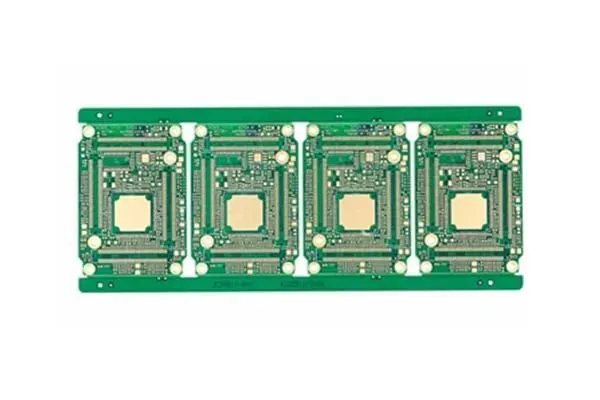
The change is cheap or catastrophic depending on when you ask
A change request on an HDI board has no inherent price. The same change — move a via, adjust a trace, swap a material — costs almost nothing on Monday and means scrapping the lot on Thursday. Nothing about the change itself moved. What moved is the board.
This catches buyers out because the mental model is wrong. Most purchasing experience comes from processes where a change is an edit: you revise the document, the supplier picks up the new revision, work continues from where it was. HDI does not work that way. An HDI board is built in sequence, and each step buries the previous one under copper and resin. Once a layer is laminated, it is not accessible. Not "difficult to access" — not accessible. There is no operation that reopens it. The only way to change something inside a pressed stack is to build a new stack.
So the first question on any HDI change is not "can you do this?" It is "where is my job right now?" The answer to the second question determines the answer to the first, and it also determines who pays.
Six stages, and what each one closes behind it
The sequence below is the general order of an HDI build. The specific arrangement varies by supplier and by build, and your supplier's own process flow is the authority for your job. The point is not the exact step list — it is that the list is *ordered*, and ordering is what creates the lock.
Inner layer imaging. The circuit pattern on the internal layers is formed. Until this runs, internal routing, internal plane shapes and internal clearances are still files. After it runs, they are physical features on panels that have already been processed.
Laser drilling. Microvia locations are formed in the dielectric. Via positions on the layers being drilled stop being coordinates and become holes.
Via fill and plating. The drilled structures are metallised and filled. The via structure — whether a hole is filled, capped, stacked or staggered — is now mechanically realised, and the surface above it has been prepared on that assumption.
Sequential lamination. The stack is pressed, layer group onto layer group. This is the hard boundary. Everything inside the pressed region is now enclosed. Layer order, dielectric thicknesses in that region, internal copper, and any via structure inside it are permanent for that panel.
Outer layer processing. The external circuit pattern, outer drilling and outer features are formed. External geometry is still open until this point; afterwards only the outermost operations remain.
Surface finish and final operations. Finish, profiling, final electrical test and inspection. The board becomes a deliverable. Changes here are the narrowest of all — but also, occasionally, the cheapest, because some surface-level requirements can still be redirected before finish is applied.
Note the asymmetry: the stages early in the list close the things buyers most often want to change late. Stackup, via structure and internal routing are decided first and buried first. Cosmetic and surface requirements are decided last and stay open longest. This is exactly backwards from the order in which design problems tend to surface.
Three outcomes, not a sliding scale
When you submit a change, the supplier is not computing a price. They are classifying your change into one of three outcomes, and the outcome follows almost mechanically from the stage.
Outcome A — a file change. The affected operation has not run yet. The supplier replaces the data, re-issues the shop documentation, and continues. Cost is administrative: engineering time, possibly a revision fee, possibly a short schedule shift if the queue has to be re-entered. This is the outcome everyone assumes they are asking for.
Outcome B — a tooling or rework change. The affected operation has run, but the result is still reachable. The change may require new tooling, re-processing of a step, or additional operations that were not quoted. Cost is real and itemisable: the new tooling, the re-run, the material consumed by the panels that went through the old version. Schedule moves by the length of the re-run plus its position in the queue.
Outcome C — a rebuild. The affected feature sits inside a region that is already closed. There is no operation that reaches it. The panels in process become scrap, and your job restarts from raw material. Cost is the full build cost again, minus whatever is genuinely reusable, plus the scrap you now own. Schedule restarts from the beginning, not from where you were.
The gap between A and C is not incremental. It is the difference between a revision fee and a second board order. And because buyers habitually describe all three with the same phrase — "we need to make a small change" — the supplier's reply often lands as a shock.
The changes that mean a rebuild once lamination has run
Some change categories reliably produce Outcome C after the stack is pressed. These are worth memorising, because they are the ones where waiting one extra day to decide converts an administrative cost into a full rebuild:
- Layer order. Any change to which layer sits where inside the pressed region. The stack is the stack.
- Via structure inside the pressed region. Depth, start and stop layers, whether a via is stacked or staggered, whether it is filled. These are formed and then enclosed.
- Dielectric thickness in the pressed region. Thickness is a property of the materials that were pressed. A new thickness is a new press.
- Base material. A different laminate or different copper foil means different panels from the start.
- Internal routing and internal clearances. Inside the pressed region, the pattern is final.
- Internal plane shapes and splits. Same reason — they are internal copper features, formed and then buried.
Conversely, these categories often remain open later, though never automatically — your supplier's flow decides:
- Surface finish, if finish has not been applied.
- Solder mask and legend details, if those operations are still ahead.
- Board outline and profiling, if profiling is still ahead and the change fits within the panelised material.
- Marking, packaging and documentation requirements, which usually sit at the very end.
- Quantity, sometimes, and only in one direction — reducing is easier than increasing, because increasing may need material that was not ordered.
Do not read either list as a promise. Read them as a prompt: the first list means stop and ask immediately, because the window may already have closed. The second means you probably have room, but still need confirmation in writing.
What a change request has to carry to get a same-day answer
Most change requests cannot be answered quickly, and the reason is almost always missing information rather than supplier slowness. A supplier who receives "can we move this via?" has to find your job, establish its physical state, work out whether the affected region is still open, and only then reason about cost. If your message does not identify the job state, the first reply you get will be a question, and you have lost a day.
A change request that can be answered on the same day contains:
Job identification. Purchase order reference, part number, revision currently in production, and lot or batch if the order is split. Not "the HDI board we discussed."
What is changing, stated against the current revision. The specific feature, layer and location — ideally as a marked-up extract of the file already in production, not a fresh full data set with no diff. A full re-upload without a change description forces the supplier to find the difference themselves, and they may find a different set of differences than you intended.
Whether the change touches internal layers. You often know this and the supplier does not, because you know the design intent. Saying it up front lets them answer the rebuild question first instead of last.
Your tolerance on the three outcomes. State explicitly: will you accept a rebuild if that is the only route, will you accept a schedule shift, or does the original date hold regardless. This single sentence prevents an entire round trip.
Whether a split is acceptable. Can the panels already in process ship as they are, with the change applied to a later batch? Sometimes this converts Outcome C into Outcome A plus a second order, and it is almost always worth asking.
Your decision deadline. When the window closes on your side. If the supplier knows your job reaches lamination tomorrow and your answer is due next week, they can tell you that the choice is already being made by the calendar.
Who approves, and which document the approval has to live in
A change is not approved because someone agreed. It is approved when the agreement reaches a document that acceptance will later be judged against. These are not the same event, and the gap between them is where disputes are born.
Four document types commonly carry an HDI change, and they differ in what they can actually settle:
An engineering query reply records a technical decision inside the supplier's workflow. It is good at establishing what was decided and when. It is weak on commercial consequences — an EQ reply that confirms a technical change rarely establishes who pays for it.
A formal change notice or deviation record records the technical change and the authorisation together, and this is the form that holds up best at incoming inspection, because it exists as a controlled document on both sides.
A revised drawing or revised data package makes the change part of the specification. This is the strongest form for anything that will be inspected against, because the acceptance criteria themselves move. It is also the slowest.
A purchase order amendment is the only one of the four that reliably settles money and schedule. Price change, scrap liability and the new date belong here. A technical change approved without a PO amendment often means the commercial question is still open, and it will reopen at invoicing.
The practical failure is not choosing wrong — it is choosing only one. A change that alters what will be inspected *and* what will be paid needs the specification form and the commercial form. One without the other leaves half the change unapproved.
On authority: confirm whose approval the supplier treats as binding on your side, and whose signature binds theirs. A change approved by someone the other party does not recognise as authorised is a change that can be disclaimed later, usually at the worst moment.
Verbal agreement and written confirmation are not the same object
A phone call that resolves a change feels like progress, and it genuinely is — it gets the decision made while the window is open. But a verbal agreement cannot be inspected against. At incoming acceptance, the inspector compares boards to documents. If the boards reflect a verbal change and the documents reflect the original, the boards fail against the specification that is actually on file, and you are now arguing about a conversation.
The working pattern: have the call, decide, then send a written confirmation the same day that states what was agreed, which outcome class it falls into, what it costs, what it does to the date, and which document will carry it. Ask for acknowledgement. This is not bureaucracy — it is the difference between a change that holds and a change that is re-litigated at receipt.
The clauses that belong in the PO, before any change exists
Everything above is easier if the terms were written before a change was needed. Five clauses do most of the work:
Stage definition and notification. The supplier notifies you when the job passes defined process milestones, or at minimum tells you on request. Without this you are guessing at your own window.
Change classification and pricing basis. How the three outcomes are determined and priced. Agreeing the *method* in advance is far easier than agreeing a *number* under pressure.
Rebuild cost basis. What a rebuild charges for: material, processing completed, tooling re-use. State whether tooling already paid for carries over.
Schedule treatment. How much the date moves for each outcome class, and whether the queue position is held or lost.
Scrap disposition and evidence retention. What happens to scrapped panels, and whether they are retained long enough to support a dispute about why the change was needed. Scrap that has been discarded cannot be examined.
None of these clauses prevent a change. They stop the change from becoming a negotiation conducted while panels sit in a queue.
After the change: what acceptance has to re-check
A change that has been approved and built still has to be verified, and the verification is not the one you planned. Three things need explicit attention:
The revision actually built. Confirm which revision the delivered lot reflects, and that the shipping documentation names it. Mixed-revision deliveries happen most often immediately after a change.
Whatever the change could have disturbed. A change rarely affects only its own feature. If the stackup moved, impedance-related attributes may have moved. If a via structure changed, test coverage may need to change with it. Ask the supplier which of their checks changed as a result of the change — they know, and they will usually say if asked.
The acceptance criteria themselves. If the change moved the specification, the inspection plan has to move too. Inspecting a changed board against the pre-change criteria produces either false rejections or false acceptances, and both are expensive.
Related pages on PCB168
- HDI PCB manufacturing — build options and what to specify
- Multilayer PCB production — where a multilayer build differs from an HDI build
- Manufacturing capabilities — process scope overview
- Request a quote — submit a data package for review
- HDI PCB manufacturing: specify, compare, verify — the overview this article sits under
- HDI engineering queries: which answers you cannot take back — the same authority question, before production starts
- HDI build class: which decisions are yours — deciding the build at RFQ stage
- Which process steps are not done in-house — why a change may involve more than one site
- Who absorbs scrap and who owns delivered quantity — scrap liability in the base order
- Tooling and NRE: what you own on the reorder — whether tooling carries over after a rebuild
- When fabrication specifications conflict — which document wins after a change
- Incoming acceptance plan for PCB delivery — re-checking a changed lot
FAQ
Can I change the stackup after my HDI order has entered production?
Only if lamination has not run on the affected region. Once a layer group is pressed, layer order and internal dielectric thicknesses in that region are permanent for those panels, and a stackup change means building new panels. Ask your supplier where the job stands before you decide anything else — the physical state of the job, not the nature of the change, determines the answer.
Why does my supplier call a small change a rebuild?
Because "small" describes the design edit, not the manufacturing consequence. A single via whose depth changes may sit inside a pressed region, and reaching it requires a new stack. The size of the edit and the size of the recovery are unrelated quantities.
Which HDI changes are usually still possible late in the process?
Typically surface finish before finish is applied, solder mask and legend details before those operations run, board outline before profiling, and marking or packaging requirements at the end. None of this is automatic — your supplier's specific process order decides, so confirm per job rather than assuming.
Does an email confirmation count as change approval?
It records agreement, which is better than a phone call alone, but it may not move the specification or the commercial terms. If the change alters what will be inspected, it needs to reach a revised drawing, data package or formal change notice. If it alters price or date, it needs a PO amendment. Email is evidence that a decision was made, not always the instrument that implements it.
Who pays when a change forces a rebuild?
Whoever the terms say, which is why the pricing basis belongs in the PO rather than in the change conversation. In the absence of agreed terms, the cost of panels already processed to your instruction generally falls to the buyer, which is precisely the outcome worth negotiating before it happens.
How do I avoid this situation on the next order?
Decide the internal structure before release — stackup, via structure, materials and internal routing are the categories that lock earliest. Then put stage notification and change classification clauses in the PO so that when something does come up, you know your window and your cost basis before you ask.
Need PCBs for Your Project?
Get an instant quote — prototypes from $2, delivered worldwide.
Get Instant Quote