Ultra HDI PCB Manufacturer: The Label Nobody Defines the Same Way | PCB168
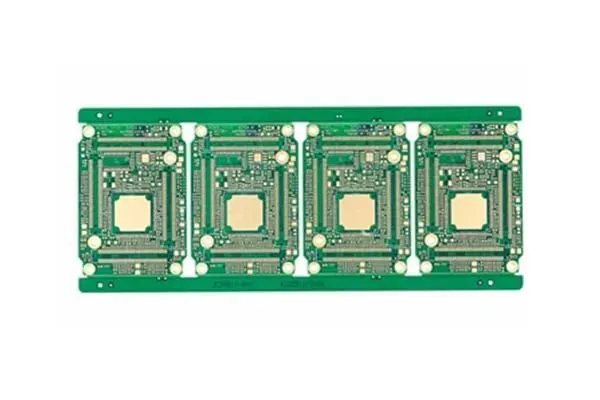
Start with the conclusion: you cannot shortlist on the word "ultra." There is no tier, class or grade called ultra HDI in the standards framework the rest of your specification already relies on. IPC-2226 organises HDI by build-up construction type; IPC-6012 sets performance and acceptance classes. Neither one contains an entry you can point at and say *this is what ultra means*. The word exists in supplier marketing and in search queries, and nowhere in between.
That has a specific consequence for sourcing, and it is not the one people expect. The problem is not that some suppliers are exaggerating. The problem is that two suppliers answering "yes, we do ultra HDI" are each confirming something true about a different thing, and the two answers are not comparable. Both are honest. Both are useless as a filter.
This is also why the question survives so long inside an RFQ cycle. A label with no definition costs nothing to agree to. It passes quotation, it passes the kickoff call, it passes the supplier's internal review — because at no point does anyone have to convert it into an instruction. Then the board has to actually get built, and a process engineer needs a number on a work order. "Build it to ultra HDI" is not something any process step can execute.
The four readings in circulation
When a supplier says ultra HDI, they are almost always referring to one of four things. These are not stages of the same ladder, and none of them contains the others.
Reading 1 — Interconnect freedom. Here "ultra" means every layer can connect to every adjacent layer, so routing is no longer constrained by where the through-holes sit. The claim is about *build structure*: how many sequential build-up and lamination operations the construction requires, and whether vias can be placed anywhere rather than only in the drilled field.
Reading 2 — Conductor geometry. Here "ultra" means the line width and spacing fall into a finer band than the supplier's regular HDI work. The claim is about *imaging and etching resolution*, and it says nothing about interconnect structure. A board with very fine conductors can still be a conventional two-build-up construction.
Reading 3 — Process family. Here "ultra" means the supplier is using a different metallisation approach to form conductors, rather than pushing their standard subtractive line harder. This is the most consequential reading and the least likely to be stated, because it changes the cost base, the tooling, and which attributes are even controllable.
Reading 4 — Substrate adjacency. Here "ultra" means the work sits near the boundary with IC substrate practice — different materials, different panel formats, different acceptance norms, often a different part of the business entirely.
A supplier strong in Reading 1 may have no interest in Reading 3. A supplier whose "ultra" means Reading 2 will answer yes to your question and then quote a construction that cannot route your board at all. The label hides exactly the axis you needed to compare.
Where the mismatch actually surfaces
The mismatch does not surface during negotiation. It surfaces at one of three later moments, and the later it is, the more expensive the conversation.
At engineering review, if you are lucky. The supplier opens the data, sees a construction they cannot build the way they assumed, and comes back asking for changes. You lose schedule, you keep your money. This is the good outcome.
At first build, more often. The board is manufacturable under the supplier's reading, so nothing stops. It is built to a structure that satisfies "ultra HDI" as *they* define it, and it does not satisfy your routing or your electrical intent. Nobody violated anything, because nothing binding was ever written.
At second source, worst of all. You qualified supplier A whose "ultra" was Reading 1, and you award supplier B whose "ultra" is Reading 2. Both boards are legitimately "ultra HDI." They are not equivalent, and now you have two incompatible builds carrying the same part number.
Why the usual follow-up question does not help
The instinct is to ask for capability numbers: *what is your minimum line width, what is your smallest via, how many build-up layers.* That question is better than the label, but it still fails, for a reason worth naming.
Capability numbers describe the best case the supplier has ever achieved, not the conditions under which they will accept your order. Asking for a floor value invites the floor value. It is answered by a sales engineer quoting the process development record, and it does not tell you whether that figure is available on your layer count, your copper weight, your panel size, or your quantity — simultaneously. A number that is real in isolation can be unavailable in combination, and the label-plus-floor-value conversation never reaches the combination.
So the fix is not to replace one vague question with one sharper number. It is to stop asking about capability altogether and start asking the supplier to describe the construction they intend to quote.
Replace the label with structural declarations
These are the items that do convert into work instructions, and that a supplier can only answer yes or no to. Put them in the RFQ in place of the word ultra.
Declare the interconnect requirement as a structure, not a grade. State whether your routing requires connections between any adjacent layer pair, or whether it can be satisfied by build-up only on the outer regions over a conventional core. This single statement separates Reading 1 from Reading 2 before anyone quotes.
Declare which regions carry the finest geometry. Fine conductors under a single dense component are a local requirement. Treating them as a board-wide requirement reprices the entire panel. State the region, not a global minimum.
Ask which construction they are quoting, in their own words, and require it in writing. Not "can you do it" but "describe the construction this price is based on." A supplier who has to write the construction down cannot answer with a category name.
Ask whether the quoted construction is their routine production work or a development exercise. This is the question that resolves Reading 3 without you having to name processes. Both answers can be acceptable; only one of them carries schedule and yield risk you should be planning around.
Ask what changes if quantity goes up. If the construction they quoted at prototype volume is not the construction they would run in production, you need to know now, not at transfer.
The one question that exposes a mismatch immediately
If you only add one line to the RFQ, add this one:
> *"Please confirm, in your own description, the build-up construction and the interconnect arrangement this quotation is based on, and state which regions of the board the finest conductor geometry applies to."*
A supplier whose "ultra" was Reading 1 will describe layer pairs and lamination sequence. A supplier whose "ultra" was Reading 2 will describe conductor dimensions and say nothing about structure. A supplier operating in Reading 3 or 4 will usually volunteer it unprompted, because it affects their own pricing logic and they need you to know.
You have not asked anyone to prove anything, and you have already separated four incomparable answers. That is the entire value of removing the label.
What you keep if you never make the substitution
Without the substitution you still get quotes, and this is why the problem persists. You get comparable-looking prices for non-comparable constructions, which is worse than getting no quotes, because it produces a decision. The spread between two "ultra HDI" prices gets read as a competitiveness signal when it is actually a signal that the two suppliers are quoting different boards.
You also lose the ability to hold anyone to anything. A specification built on an undefined adjective has no failure condition. At incoming inspection there is no attribute to check, because "ultra" is not measurable. The supplier delivered ultra HDI by their definition, the only definition that was ever written down anywhere — in their marketing copy.
For related RFQ-side work: once the construction is settled, the capability question becomes answerable in a structured way, and our breakdown of HDI capability tiers and the evidence to request covers how to verify a specific tier instead of a label. If your fine-geometry requirement is the binding one, the RFQ fields that make a fine line request quotable lists what has to accompany the dimension. And if you are not yet certain your part belongs in the PCB category at all, the PCB versus IC substrate boundary settles that first — a question Reading 4 above tends to raise.
Where this sits in the sourcing sequence
This is an upstream step, and it is cheap. It happens before file transfer, before NDA, before any capability audit. Its only job is to make sure that when you compare suppliers, you are comparing answers to the same question.
Everything downstream — tier verification, evidence requests, tolerance ownership, acceptance criteria — assumes the construction is already agreed. If the construction was never agreed because a category name stood in for it, every later step inherits the ambiguity and none of them can detect it.
FAQ
Is "ultra HDI" a formally defined level anywhere?
Not in the standards framework your specification already uses. IPC-2226 classifies HDI by build-up construction type and IPC-6012 defines performance classes; neither contains a grade named ultra HDI. It functions as a category name in supplier marketing and in search behaviour, which is why it is useful for finding suppliers and unusable for comparing them.
If both suppliers say yes, is one of them lying?
Usually neither. Both are describing real work, against different readings of the word. That is precisely why the label cannot be used as a filter — the failure mode here is ambiguity, not dishonesty, and asking them to be more truthful does not fix it.
Can I just ask for their minimum line width and spacing instead?
It is an improvement, but it answers a different question than the one you have. A floor value describes the best result the supplier has produced, not what is available on your layer count, copper weight, panel size and quantity at once. Ask them to describe the construction they are quoting; the dimensions then sit inside a context you can hold them to.
Should I avoid the term entirely in my own documents?
Use it where it helps you find candidates, including in search. Remove it everywhere it would have to be executed or accepted against — the fabrication notes, the purchase specification, the acceptance criteria. A word with no definition cannot be inspected.
Two "ultra HDI" quotes differ by a wide margin. What does that tell me?
Most likely that they are quoting different constructions, not that one is more competitive. Before reading the spread as a commercial signal, get both suppliers to describe their intended construction in writing. The spread frequently disappears, or inverts, once both are quoting the same board.
Does this mean capability tiers are not worth asking about?
They are worth asking about, after the construction is settled. Tier questions are verification tools; they assume you already know which build you need. Applied to an undefined label, they just produce a tier claim with the same ambiguity one level down.
---
Need PCBs for Your Project?
Get an instant quote — prototypes from $2, delivered worldwide.
Get Instant Quote